
Why US Food Importers Source Honey from India
The United States has a large food manufacturing, retail and distribution industry. Honey is used in packaged foods, bakery products, beverages, sauces, breakfast products and many other applications.
For US businesses looking to diversify their sourcing options, India can be an important honey supply destination.
However, choosing a supplier requires more than comparing prices. Importers must evaluate product quality, food safety practices, regulatory requirements, documentation and the supplier's ability to deliver consistent bulk quantities.
A reliable Honey Exporter India should understand the requirements of international buyers and provide clear information about sourcing, processing, testing and shipment preparation.
Before placing an order, US importers should examine several important areas. These checks can help reduce sourcing risks and support a dependable supply relationship.
Understanding the Requirements of Your Business
The first step is to identify exactly how the honey will be used.
A food manufacturer may require specific moisture levels, colour, flavour and processing characteristics. A distributor may prioritise packaging formats, shelf-life information and consistent availability.
Importers should prepare a written product specification before requesting quotations.
This specification can include:
Required honey type and floral source, if applicable
Expected colour and sensory characteristics
Moisture content requirements
Relevant quality and safety parameters
Required laboratory testing
Packaging size and material
Order quantity and delivery schedule
Documentation requirements
Clear specifications help suppliers understand the order and provide more accurate quotations.
1. Verify the Supplier's Manufacturing and Export Capabilities
Not every honey supplier has the same production capacity or export experience.
Some businesses focus on local distribution, while others handle bulk processing, commercial packaging and international shipments.
US importers should understand the supplier's actual role in the supply chain.
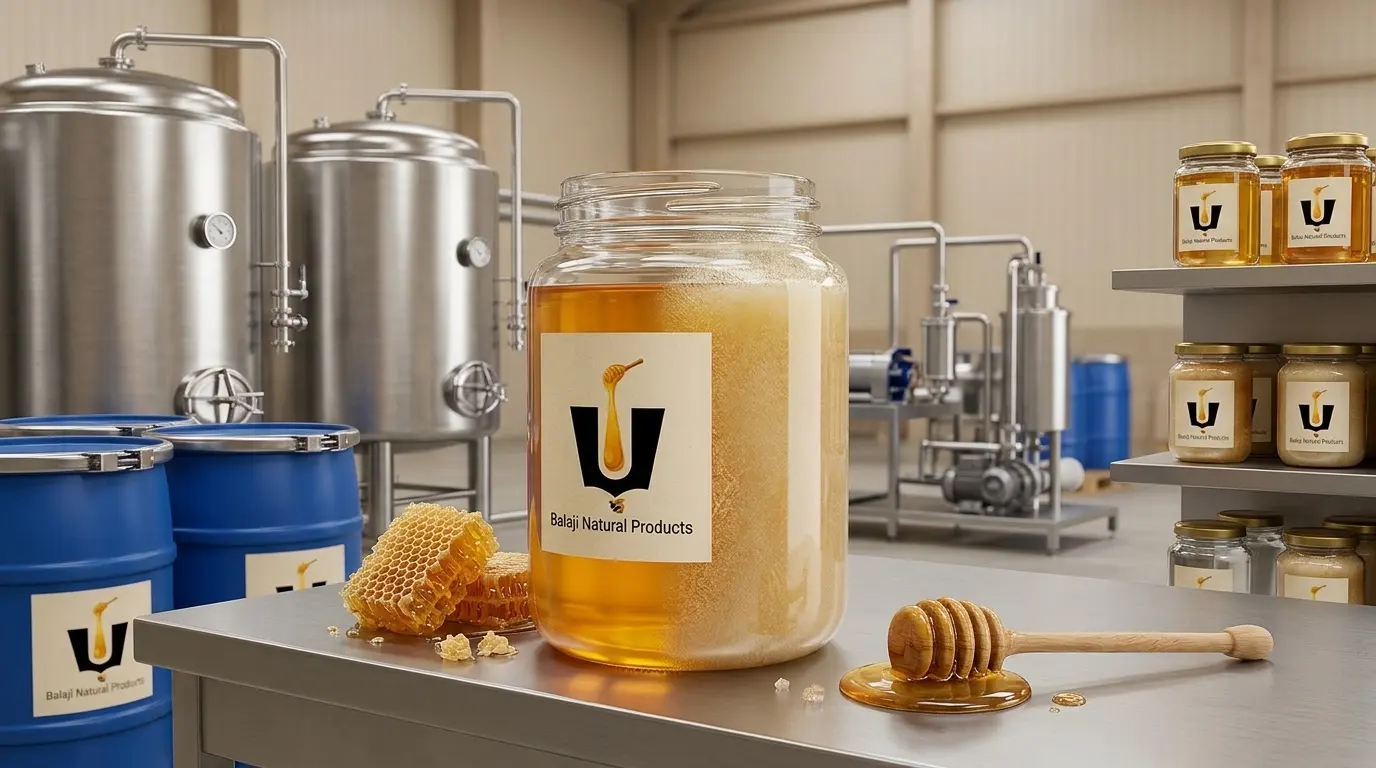
Check Manufacturing and Processing Facilities
Ask whether the supplier operates its own processing facility or sources finished honey from other manufacturers.
This distinction matters because it affects quality control, production visibility and traceability.
A supplier should be able to explain its major production stages.
These may include:
Raw honey procurement
Incoming material inspection
Storage and handling
Filtration and processing
Laboratory testing
Bulk packaging
Finished-product inspection
Where possible, request a facility overview, relevant photographs, process documentation or an opportunity to conduct a supplier assessment.
Evaluate Export Experience
International orders involve additional coordination compared with domestic supply.
Importers should ask whether the supplier has experience handling export packaging, shipping documents, container loading and communication with freight partners.
Useful questions include:
1.Which countries has the supplier previously shipped to?
2.Can it handle the required order volume?
3.Can it provide batch-specific quality documents?
4.Does it understand the buyer's packaging requirements?
5.Can it coordinate with the importer's freight forwarder?
A supplier's answers can help establish whether it is prepared to handle the commercial requirements of the order.
2. Examine Honey Quality and Laboratory Testing
Product quality should be one of the first areas US importers evaluate.
Honey is a natural product. Its characteristics can vary depending on floral origin, season, geographical conditions and harvesting practices.
However, commercial buyers need each shipment to meet the agreed product specifications.
Check Important Honey Quality Parameters
Importers should agree on the relevant testing parameters before production or shipment.
Depending on the product and buyer requirements, these may include:
Moisture content: Moisture affects honey stability and can influence fermentation risk.
HMF (Hydroxymethylfurfural): HMF is an important quality indicator associated with heating and storage conditions.
Diastase activity: This enzyme activity can help assess certain aspects of honey quality and processing history.
Acidity: Acidity testing helps determine whether the honey meets the agreed specifications.
Electrical conductivity: This measurement can help characterise honey and may vary with its botanical source.
Colour and sensory characteristics: Appearance, aroma, flavour and consistency should be assessed against the agreed product requirements.
The exact testing panel should be determined by the product specification, applicable standards and the importer's risk assessment.
Request a Batch-Specific Certificate of Analysis
A Certificate of Analysis (COA) provides laboratory results for a particular product batch.
US importers should request a COA that clearly identifies the batch being supplied.
The document should include relevant test parameters, reported results, testing methods where applicable, and laboratory details.
A generic report that does not relate to the actual shipment may not provide sufficient assurance.
Importers should also confirm whether the testing laboratory is suitable for the required analysis.
For higher-risk sourcing arrangements, buyers may consider independent laboratory testing or additional verification before shipment.
Consider Adulteration and Contamination Risks
Honey authenticity is an important consideration in international sourcing.
Importers should ask suppliers about their procedures for preventing adulteration and maintaining product integrity.
Depending on the buyer's risk assessment, additional testing may be appropriate to investigate possible added sugars, unwanted residues or other contaminants.
The testing approach should be agreed in advance.
It is also important to understand that no single laboratory test can answer every question about honey authenticity and safety.
A suitable testing programme may use multiple methods based on the risks associated with the product and supply chain.
3. Understand US FDA Import Requirements
US food importers must understand the regulatory responsibilities involved in bringing honey into the country.
The US Food and Drug Administration (FDA) regulates imported food products under applicable food safety and labelling requirements.
Importers should not assume that a supplier's export documents automatically establish compliance with US requirements.
Understand the Foreign Supplier Verification Program
The Foreign Supplier Verification Program (FSVP) is an important part of the US Food Safety Modernization Act (FSMA).
In general, covered US importers must establish and follow an FSVP for the food and foreign supplier they import.
The programme involves evaluating food safety hazards, assessing supplier performance, approving suppliers and conducting appropriate verification activities.
Depending on the risk assessment, verification may include:
Reviewing relevant food safety records
Sampling and laboratory testing
Conducting supplier audits where appropriate
Reviewing corrective actions
Reassessing supplier performance
The US importer is generally responsible for meeting its FSVP obligations.
Therefore, Indian suppliers should be prepared to provide relevant information about their manufacturing processes, food safety controls and quality records.
Importers should review the official FDA FSVP requirements and seek qualified regulatory advice when necessary.
Check Food Facility Registration
Most facilities that manufacture, process, pack or hold food for consumption in the United States must register with the FDA, unless an applicable exemption applies.
This requirement can include foreign food facilities.
Importers should ask the supplier for the relevant facility registration information and verify the details through the appropriate process.
FDA food facility registration information is not publicly available for general searches, so buyers should request the necessary information directly from the supplier.
It is important to understand that FDA registration is not the same as FDA approval or certification of a particular honey product.
Confirm Prior Notice Requirements
FDA generally requires Prior Notice before food shipments arrive in the United States, unless an exemption applies.
Prior Notice provides the agency with advance information about incoming food shipments.
The required information and submission timing depend on the shipment and transport method.
Importers should coordinate with their customs broker, freight forwarder or responsible filing party to ensure that the notice is submitted correctly.
Failure to provide adequate Prior Notice can lead to shipment delays or refusal.
4. Review Honey Labelling Requirements
Labelling is another important consideration when sourcing honey for the US market.
Importers should review the proposed product label before production and shipment.
The label must accurately describe the product and comply with applicable US requirements.
Check the Product Name and Ingredient Information
The FDA provides guidance on the proper labelling of honey and honey products.
For a product consisting only of honey, the common or usual name is generally "honey."
If honey contains an added sweetener, such as corn syrup, it cannot simply be labelled as honey without accurately describing the blend.
This distinction is important for importers purchasing products for retail sale or further food manufacturing.
Review the FDA guidance on honey labelling before finalising the label.
Review Other Label Information
Depending on the product and applicable rules, importers should review:
Product identity
Net quantity
Nutrition information, where required
Ingredient declaration, where applicable
Manufacturer or distributor information
Country-of-origin marking
Lot or batch identification
Storage instructions, where appropriate
The exact requirements depend on the product format, packaging and intended market.
Importers should have labels reviewed by a qualified US regulatory professional before commercial production.
5. Evaluate Packaging and Bulk Shipping Options
Packaging affects product protection, transportation efficiency and handling at the destination.
US importers should select packaging according to order size, storage arrangements and the intended application.
Choose Suitable Bulk Packaging
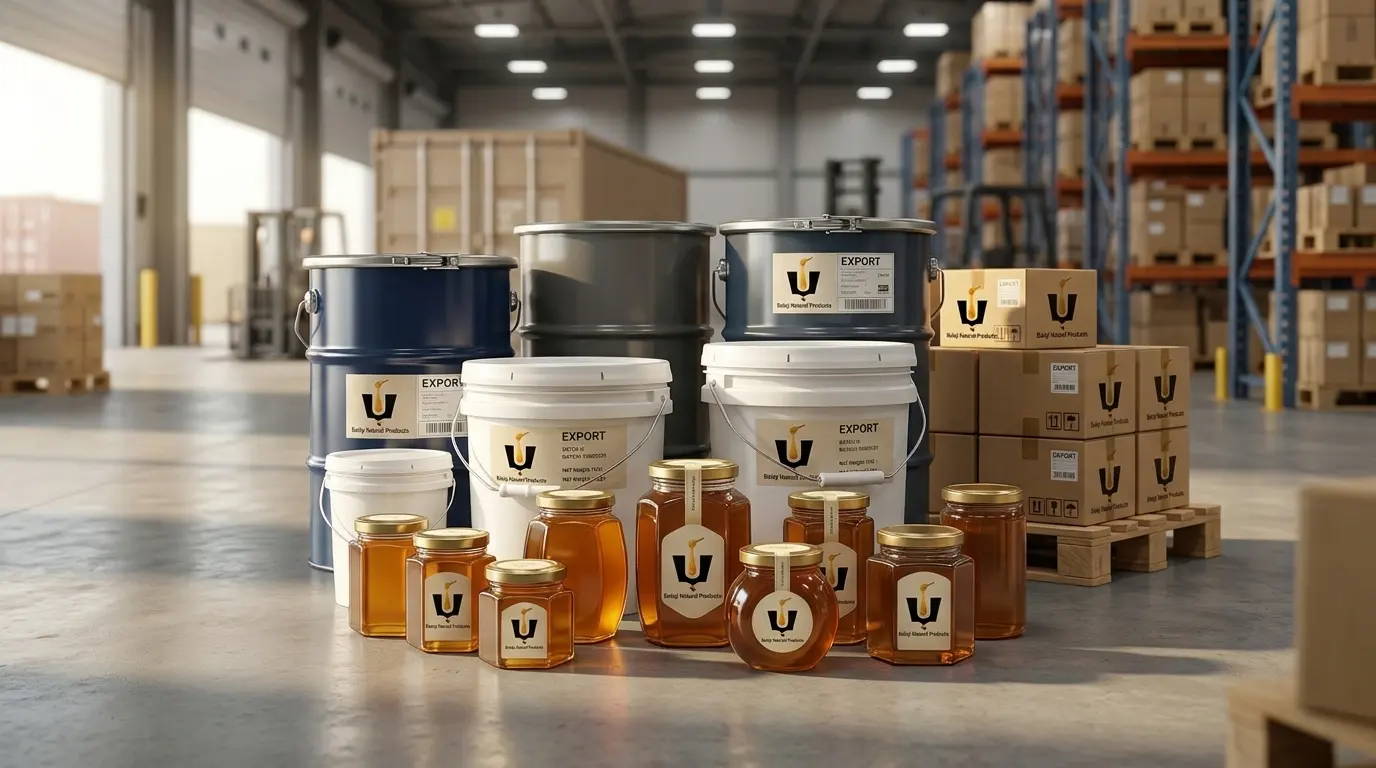
Commercial honey may be supplied in different packaging formats, including:
Food-grade buckets
Suitable cans
Food-grade drums
Epoxy-coated drums, where appropriate for the product and use
The importer should confirm that the packaging material is suitable for food contact and compatible with the product.
Container specifications, closures, seals and handling instructions should be discussed before placing the order.
Check Container and Shipment Preparation
Before shipment, the exporter and importer should agree on the packaging configuration and loading requirements.
Important checks include:
Packaging condition
Container cleanliness and suitability
Secure closures and seals
Batch identification
Palletisation requirements, if applicable
Protection against leakage and physical damage
Loading and shipping documentation
Importers should also confirm the expected transit time and how the product will be protected during transportation.
Clear shipment preparation reduces avoidable handling problems.
6. Verify Traceability and Documentation
Traceability allows importers to connect a finished honey shipment with its original raw material and production records.
This becomes especially important when a quality concern or customer complaint occurs.
Request Clear Batch Traceability
A supplier should be able to explain how it identifies and tracks honey throughout production.
Useful traceability information may include:
Raw honey supplier details
Incoming lot numbers
Receiving and inspection dates
Processing batch numbers
Laboratory testing records
Packaging dates
Finished-product identification
Shipment references
These records can help identify the source of a problem and support corrective action.
Review Export Documentation
Documentation requirements depend on the shipment, buyer agreement, customs classification and applicable regulations.
Common commercial and shipping documents may include:
1.Commercial invoice
2.Packing list
3.Bill of lading
4.Certificate of origin, where required
5.Certificate of Analysis
6.Relevant inspection or health documentation, where applicable
7.Insurance documents, where applicable
Importers should confirm the exact documentation list with their customs broker and relevant authorities before shipment.
Document details should be consistent across the invoice, packing list, shipping records and product identification.
Incorrect or incomplete information can create unnecessary customs clearance delays.
7. Compare Pricing Beyond the Quoted Rate
Price is important when purchasing honey in bulk, but the lowest quotation is not always the most economical option.
Importers should compare the complete cost of receiving the product.
This may include:
Product price
Packaging cost
Laboratory testing
Inland transportation
Export handling charges
Freight and insurance
Customs duties and applicable taxes
Port and clearance charges
Warehousing and domestic transportation
The final landed cost provides a more useful comparison than the supplier's product price alone.
Importers should also clarify the quotation's Incoterms, payment terms, delivery schedule and responsibility for freight-related costs.
This helps prevent unexpected expenses during the transaction.
8. Assess Communication and Supply Reliability
A successful sourcing relationship requires regular communication.
US importers may work with suppliers across different time zones and business environments.
Clear communication helps prevent misunderstandings about product specifications, production schedules and shipment details.
Check the Supplier's Response Process
Before placing a large order, evaluate how quickly and clearly the supplier responds to questions.
A dependable supplier should be able to explain product details, share relevant documentation and communicate any production or shipment changes.
Buyers should also establish a clear point of contact for quality-related concerns.
Confirm Production Capacity and Delivery Planning
Ask the supplier whether it can meet the required quantity within the expected timeline.
For recurring orders, discuss production planning, raw material availability and the possibility of maintaining agreed specifications across shipments.
A supplier should communicate potential delays early rather than waiting until the expected dispatch date.
9. Request Samples Before Confirming a Large Order
A product sample gives buyers an opportunity to evaluate honey before committing to a major shipment.
Importers can assess the sample's colour, aroma, flavour, texture and other agreed characteristics.
Where necessary, samples can also be submitted for independent laboratory testing.
Establish a Sample Approval Process
A useful sample approval process should include:
1.Confirming the required honey specification.
2.Requesting a representative sample.
3.Reviewing sensory characteristics.
4.Conducting agreed laboratory tests.
5.Recording the approval decision.
6.Confirming that commercial production will follow the approved specification.
Importers should clarify how the approved sample relates to the final production batch.
Sample approval should not replace the testing and verification required for the actual commercial shipment.
10. Build a Long-Term Relationship with the Right Supplier
Finding a supplier for one shipment is different from developing a reliable long-term sourcing relationship.
US importers should look for a business that can maintain communication, provide accurate documentation and respond constructively to quality concerns.
A good working relationship is built on agreed specifications, transparent pricing, realistic delivery commitments and consistent quality management.
Before entering a long-term arrangement, buyers may consider reviewing the supplier's performance over initial orders.
They can monitor delivery accuracy, product consistency, documentation quality and responsiveness.
A dependable Honey Exporter India should be willing to discuss improvements and work with buyers when requirements change.
Conclusion
Sourcing honey from India can offer US food importers an additional supply option, but successful importing requires careful supplier evaluation.
Buyers should examine manufacturing capabilities, laboratory testing, product authenticity, FDA-related responsibilities, labelling, packaging, traceability and export documentation before confirming an order.
It is equally important to request samples, agree on specifications and understand the complete landed cost.
Choosing the right Honey Exporter India is not simply about finding a competitive price. It is about finding a supplier that can support product quality, transparent communication and dependable bulk supply over time.
Balaji Natural Products works with bulk honey requirements and understands the importance of product handling, customer specifications and supply coordination.
US importers interested in discussing bulk honey sourcing can explore the Balaji Natural Honey website and
contact Balaji Natural Honey to discuss their requirements.