Why Product Consistency Matters in Large-Scale Honey Manufacturing
Honey is a natural product, and its characteristics can vary depending on floral sources, seasons, geographical conditions and harvesting practices. However, food manufacturers, distributors, retailers and international buyers expect every shipment to meet their agreed quality specifications.
For a Honey Manufacturer India, maintaining consistent quality across large production batches is an important part of building customer confidence and long-term business relationships.
A difference in colour, flavour, aroma, moisture content or texture between batches can affect how honey performs in food production. It can also create challenges for packaging, storage, product formulation and customer satisfaction.
Manufacturers therefore need reliable processes to manage natural variations while maintaining the expected product characteristics.
Consistency does not mean making every batch identical in every natural characteristic. It means controlling production carefully so that each batch meets the agreed specifications and remains suitable for its intended application.
Understanding Natural Variations in Honey
Honey characteristics depend on several factors.
These include the flowers from which bees collect nectar, the geographical location of the apiary, weather conditions, harvesting time and natural moisture levels.
For example, honey from different floral sources may have different colours, aromas, flavours and crystallisation tendencies.
Seasonal changes can also influence the characteristics of incoming honey.
Manufacturers must understand these variations before combining or processing different raw honey lots.
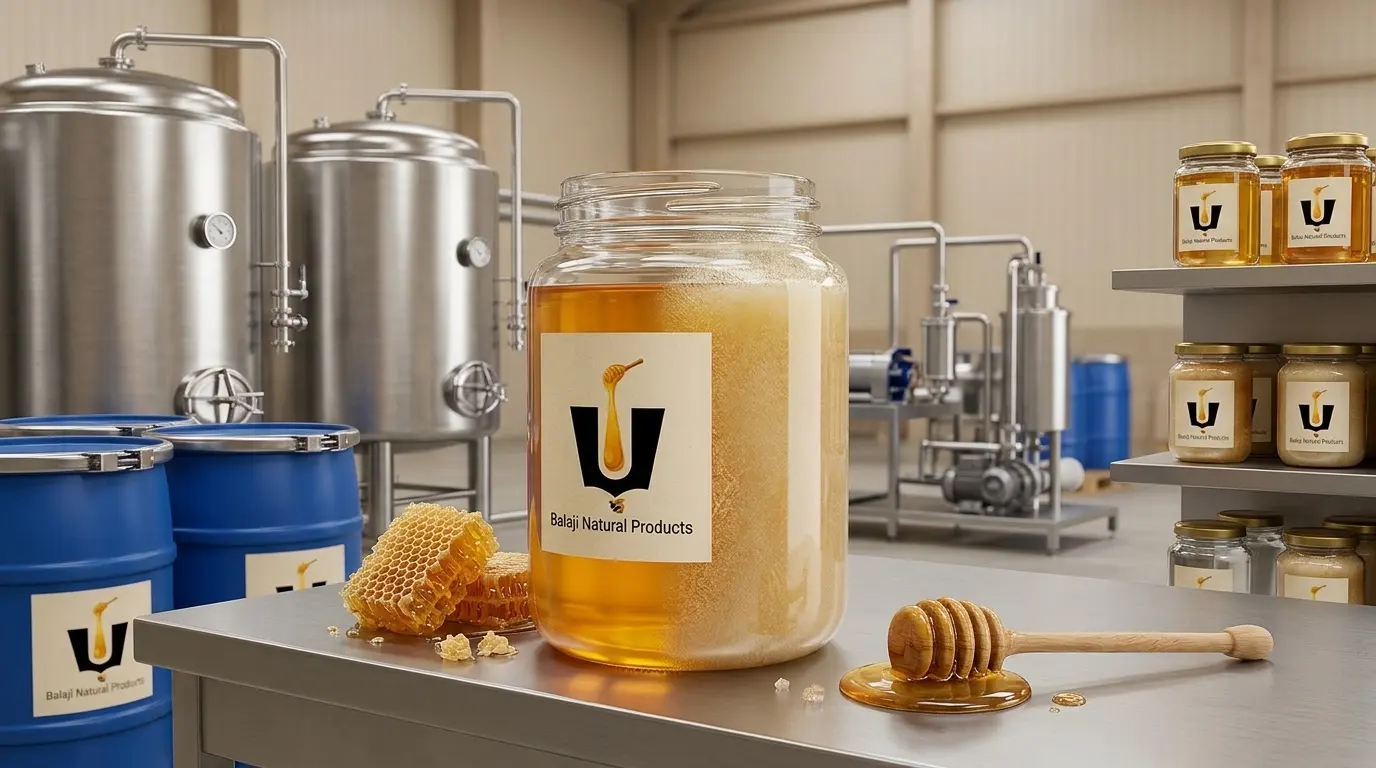
Raw honey inspection helps manufacturers understand the condition of incoming material before production begins.
Each incoming lot should be evaluated according to the company's quality procedures and the buyer's requirements.
Important inspection parameters may include:
Colour and visual appearance
Aroma and natural flavour
Moisture content
Electrical conductivity, where relevant
pH and acidity
Signs of fermentation
Presence of foreign matter
Other agreed quality and safety parameters
A documented inspection process helps manufacturers identify unsuitable material before it enters the production line.
1. Selecting Reliable Raw Honey Sources
Consistent finished products begin with reliable raw material.
Even advanced processing equipment cannot completely compensate for poor-quality or unsuitable incoming honey.
A manufacturer should develop a sourcing process that evaluates suppliers based on quality, reliability, handling practices and documentation.
Working with Trusted Beekeepers and Suppliers
Building long-term relationships with dependable beekeepers and raw honey suppliers can improve sourcing consistency.
Manufacturers should communicate their purchasing requirements clearly.
These requirements may include:
Expected honey type and floral source, where specified
Acceptable moisture range
Colour and flavour expectations
Packaging and transportation conditions
Batch identification details
Required quality documentation
Clear specifications reduce misunderstandings and help suppliers deliver material that meets production requirements.
Maintaining Supplier Records
Supplier records help manufacturers track the origin and quality history of incoming honey.
Useful information includes supplier details, collection or delivery dates, lot numbers, inspection results and any quality concerns.
When a batch does not meet specifications, these records help identify where the material came from and whether similar issues have occurred previously.
A structured supplier evaluation system also helps manufacturers make better sourcing decisions over time.
2. Implementing Batch-Wise Quality Control
Batch-wise quality control is one of the most important practices in large-scale honey manufacturing.
Instead of treating all incoming honey as one combined quantity, manufacturers should maintain clear identification for individual lots and production batches.
This makes it easier to track raw materials, processing activities and finished products.
Assigning Unique Batch Identification Numbers
Every incoming raw honey lot should have a traceable identification number.
The number can be connected to supplier information, inspection records, storage location and production details.
When multiple lots are combined, manufacturers should document which incoming materials contributed to the final production batch.
This creates a traceability record that supports quality investigations and customer requirements.
Creating Standard Operating Procedures
Standard Operating Procedures (SOPs) provide employees with consistent instructions for performing important production activities.
Honey manufacturing SOPs may cover:
Raw material receiving and inspection
Storage and handling
Heating or decrystallisation
Filtration and straining
Settling and processing
Equipment cleaning
Sampling and laboratory testing
Packaging and labelling
Finished-product release
Employees should follow approved procedures rather than relying on individual judgement for critical production activities.
This reduces process variation and makes production easier to monitor.
3. Controlling Processing Conditions
Processing conditions can influence the final characteristics of honey.
Manufacturers need to manage each production stage carefully to avoid unnecessary changes in quality.
Managing Temperature During Processing
Temperature management is particularly important during honey processing.
Honey may require controlled warming to improve its flow, support handling or assist with decrystallisation.
However, excessive or prolonged heating can affect certain quality characteristics.
Manufacturers should establish suitable temperature and time limits based on the honey type, equipment, process requirements and applicable standards.
Temperature records can help production teams identify deviations and maintain repeatable operating conditions.
Maintaining Consistent Filtration
Filtration helps remove unwanted physical particles from honey.
The filtration method should match the intended product specifications and customer requirements.
Manufacturers should monitor filter condition, equipment cleanliness and filtration performance.
Using appropriate filtration procedures helps maintain the expected appearance and physical quality of the finished product.
However, filtration should not be treated as a replacement for proper raw material inspection or food safety controls.
Standardising the Processing Workflow
A documented workflow helps ensure that each production batch passes through the same approved stages.
For example, a typical workflow may include receiving, inspection, storage, controlled processing, filtration, settling, sampling, testing and packaging.
The exact process depends on the product and manufacturing facility.
Standardisation helps reduce unnecessary differences between production runs.
4. Conducting Laboratory Testing at Different Stages
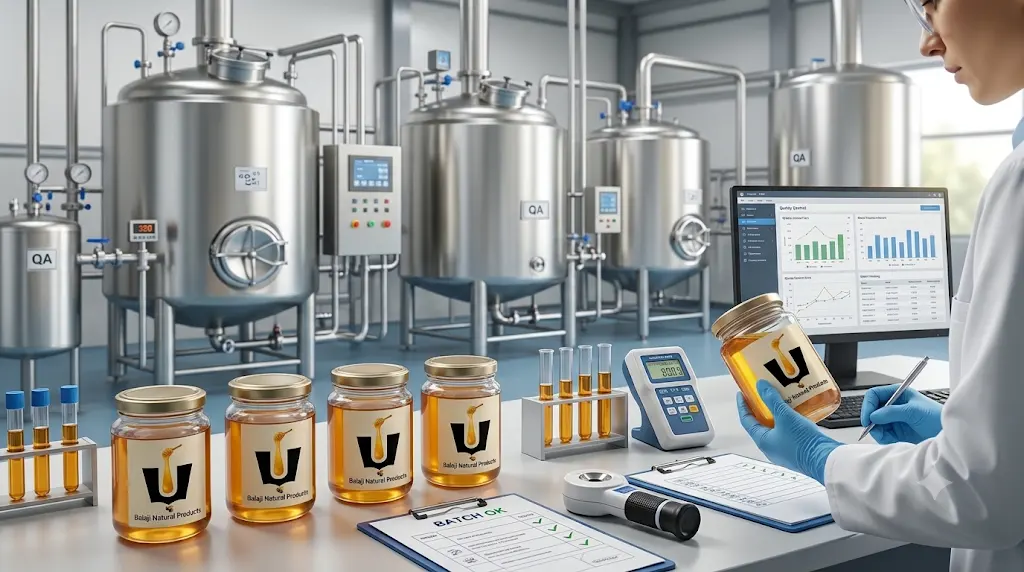
Laboratory testing provides measurable information about honey quality.
Visual inspection alone cannot confirm whether every important quality parameter meets the required specification.
A manufacturer should establish testing procedures for incoming raw materials, in-process samples and finished products.
Testing Important Honey Quality Parameters
The testing plan should reflect applicable regulations, product specifications and buyer requirements.
Common quality parameters may include:
Moisture content: Moisture levels influence honey stability and fermentation risk. Manufacturers should monitor moisture against the applicable specification.
Hydroxymethylfurfural (HMF): HMF is an important quality indicator associated with factors such as heating and storage conditions. Its acceptable level depends on the relevant standard and product requirements.
Diastase activity: This enzyme activity is used as one indicator of honey quality and can be influenced by processing and storage.
Acidity: Acidity measurements help assess whether honey meets the required quality parameters.
Electrical conductivity: This parameter can help characterise honey and may vary with floral origin.
Colour and sensory characteristics: Colour, aroma and flavour should be checked against the agreed product specification.
Testing should be performed using suitable methods and calibrated equipment.
Where required, manufacturers can use qualified external laboratories for additional analysis.
Maintaining Laboratory Records
Test results should be connected to the relevant batch identification number.
Records should include sample details, testing dates, methods, results and the person or laboratory responsible for the analysis.
If a result falls outside the approved specification, the batch should be held for investigation.
It should not be released until the issue has been reviewed and an authorised decision has been documented.
5. Managing Honey Storage Conditions
Storage practices play an important role in maintaining product quality after processing.
Even a properly manufactured batch can experience quality changes if storage conditions are unsuitable.
Choosing Appropriate Storage Containers
Honey should be stored in clean, food-grade containers that are suitable for the product and intended storage period.
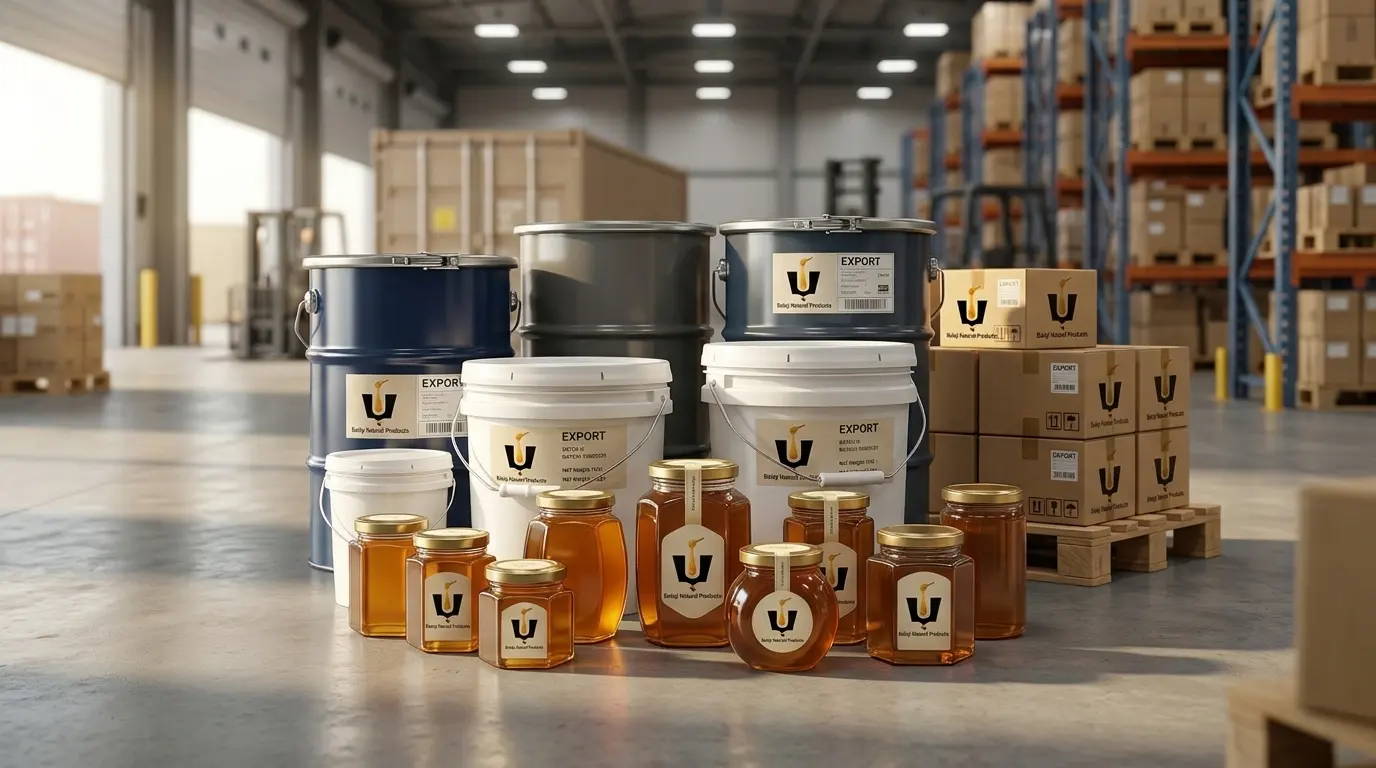
Depending on the order size and customer requirements, commercial honey may be packed in food-grade buckets, cans or suitable drums.
Containers should be properly closed to reduce exposure to moisture, contaminants and external odours.
Manufacturers should also inspect packaging materials before use.
Monitoring Warehouse Conditions
Storage areas should be clean, dry and protected from direct sunlight and excessive heat.
Manufacturers should establish suitable storage conditions based on the honey characteristics, packaging materials and applicable requirements.
Warehouse teams should regularly inspect containers for leakage, damage or signs of contamination.
Following FIFO and FEFO Practices
Inventory rotation helps manufacturers manage stock effectively.
FIFO means First In, First Out. It prioritises the use or dispatch of older inventory before newer inventory.
FEFO means First Expired, First Out. It prioritises stock with the earliest expiry or best-before date.
The appropriate method should follow the company's inventory policy and product requirements.
These practices help prevent unnecessary storage delays and improve stock management.
6. Maintaining Clean and Hygienic Production Facilities
A clean manufacturing environment is essential for maintaining product safety and consistency.
Honey processing equipment, pipelines, tanks, filters and packaging areas should be maintained according to documented hygiene procedures.
Establishing Equipment Cleaning Procedures
Manufacturers should create cleaning schedules for equipment that comes into contact with honey.
Cleaning procedures should specify:
Which equipment requires cleaning
Approved cleaning methods and materials
Cleaning frequency
Inspection requirements
Record-keeping responsibilities
Equipment should be inspected before production begins.
This helps reduce the risk of contamination and unwanted material entering the finished product.
Training Production Employees
Employees should understand the importance of personal hygiene, equipment handling and production procedures.
Training should cover correct material handling, cleaning practices, contamination prevention and batch documentation.
Regular training helps employees follow the same procedures across different shifts and production runs.
7. Using Technology to Improve Batch Consistency
Technology can make quality management more organised and efficient.
Digital records help manufacturers monitor production activities, compare test results and identify recurring quality issues.
Digital Batch Tracking
A batch tracking system can connect raw material details with processing and finished-product records.
For example, a digital system may record:
Raw honey supplier and lot number
Incoming inspection results
Production date and processing details
Temperature records
Laboratory test results
Packaging information
Finished-product storage location
Dispatch details
This information can help quality teams investigate customer complaints and identify the source of a production issue.
Analysing Quality Trends
Manufacturers can compare test results from different batches to identify patterns.
For example, repeated changes in moisture content may indicate a sourcing or storage issue.
Differences in colour may be linked to changes in floral origin or raw material selection.
Trend analysis helps manufacturers investigate the reasons behind variations rather than relying only on final product inspection.
8. Creating a Reliable Finished-Product Approval Process
A finished batch should not be dispatched simply because processing and packaging are complete.
It should pass through a defined quality approval process.
Reviewing Batch Documentation
Before releasing a batch, the quality team should review the relevant records.
These may include raw material inspection reports, processing records, laboratory results, packaging checks and traceability details.
The team should confirm that the batch meets the agreed specifications and applicable requirements.
Managing Non-Conforming Batches
If a batch does not meet the required specification, it should be identified and placed on hold.
The quality team should investigate the issue and document the findings.
Depending on the nature of the deviation, the manufacturer may decide to reject the batch, reprocess it where permitted, or take another approved corrective action.
Any reprocessing must follow suitable procedures and should not compromise product safety or quality.
9. Communicating Quality Specifications with Bulk Buyers
Product consistency also depends on clear communication between manufacturers and customers.
Different buyers may have different requirements based on their intended applications.
A food manufacturer may prioritise flavour and moisture content, while an importer may require specific documentation, packaging formats and laboratory results.
Agreeing on Specifications Before Production
Before accepting a bulk order, manufacturers should confirm the buyer's expectations.
These may include:
Honey type and floral source, where applicable
Moisture and other quality parameters
Colour and sensory characteristics
Testing and documentation requirements
Packaging size and material
Labelling and batch identification
Delivery and storage expectations
Written specifications reduce the possibility of disagreements after production.
Providing Batch-Wise Quality Documentation
Buyers may request a Certificate of Analysis (COA) or other quality documentation.
The documents should relate to the actual batch being supplied and should accurately reflect the testing performed.
Manufacturers should avoid using generic or outdated reports as substitutes for batch-specific evidence when the buyer requires it.
Reliable documentation makes it easier for customers to assess product suitability and manage their own quality systems.
10. How to Evaluate a Reliable Honey Manufacturing Partner
Businesses sourcing honey in large quantities should evaluate manufacturers beyond price alone.
A dependable manufacturing partner should demonstrate control over sourcing, processing, testing, storage and documentation.
Before placing a bulk order, buyers can consider the following questions:
1.Does the manufacturer follow documented quality control procedures?
2.Can the supplier provide batch identification and traceability records?
3.Are quality checks performed at appropriate production stages?
4.Can the manufacturer share relevant laboratory reports?
5.Are storage and packaging practices suitable for bulk honey?
6.Can the supplier meet agreed order quantities and delivery schedules?
7.Does the manufacturer communicate clearly when quality issues arise?
These questions help buyers understand whether a supplier can support consistent requirements over repeated orders.
Businesses looking for a dependable Honey Manufacturer India should prioritise transparent quality practices and documented production controls.
Conclusion
Maintaining consistent honey quality across large production batches requires more than a single inspection at the end of manufacturing.
It involves careful raw material selection, batch-wise traceability, controlled processing, laboratory testing, hygienic facilities, suitable storage and reliable documentation.
A well-managed quality system helps manufacturers identify variations early and make informed production decisions.
For bulk buyers, consistency creates confidence in product performance and supports long-term supply relationships.
For manufacturers, it improves production control, reduces avoidable quality issues and strengthens their position in competitive domestic and international markets.
Balaji Natural Products focuses on bulk honey supply and manufacturing requirements, with attention to sourcing, handling and customer specifications. Businesses interested in discussing bulk honey requirements can explore the company's website and contact its team.