Why Honey Inventory Management Matters in Food Manufacturing
Managing honey inventory requires more than keeping drums and containers inside a warehouse. Food manufacturers must plan storage conditions, monitor stock movement and maintain proper records to protect product quality.
For a Honey Manufacturer India, effective inventory management is important for maintaining consistent supply, reducing unnecessary stock accumulation and supporting uninterrupted production.
Honey is a natural food product with characteristics that can change during storage. Temperature fluctuations, moisture exposure, unsuitable packaging and poor handling practices can affect its quality.
For food manufacturers, these issues can create production delays, additional inspection requirements and avoidable procurement costs.
A well-organised inventory system helps businesses understand how much honey is available, which batches should be used first and when fresh stock needs to be purchased.
It also makes warehouse operations more predictable.
Understanding the Storage Requirements of Bulk Honey
Honey has a relatively stable composition when handled and stored correctly. However, its storage conditions still require attention.
Proper storage planning helps protect honey from moisture absorption, contamination, excessive heat and unwanted changes in physical characteristics.
1. Maintain Suitable Storage Temperatures
Temperature is an important consideration in honey storage.
Prolonged exposure to high temperatures can contribute to chemical and enzymatic changes. It may also affect colour, aroma and other quality characteristics.
Food manufacturers should maintain a suitable storage environment based on the product specification, packaging and intended storage duration.
Important practices include:
Keep honey away from direct sunlight.
Avoid placing containers near boilers, ovens or heating equipment.
Monitor warehouse temperature regularly.
Minimise unnecessary temperature fluctuations.
Follow the supplier's recommended storage conditions.
The FAO's technical guidance on honey processing and storage discusses the relationship between storage temperature and quality changes.
For long-term inventory, manufacturers should establish documented temperature limits rather than relying on general warehouse conditions.
2. Control Moisture and Humidity
Moisture management is another important part of bulk honey storage.
Honey can absorb moisture when exposed to humid air, particularly if containers are left open or their closures are damaged.
Increased moisture content can create conditions that encourage fermentation.
To reduce this risk:
Keep containers tightly sealed.
Avoid opening drums unless the honey is required for production.
Inspect lids, seals and closures.
Maintain suitable warehouse humidity.
Prevent water leakage and condensation around storage areas.
Storage rooms should also have adequate ventilation and protection against water ingress.
3. Select Appropriate Storage Containers
Packaging plays an important role in maintaining honey quality during storage and transportation.
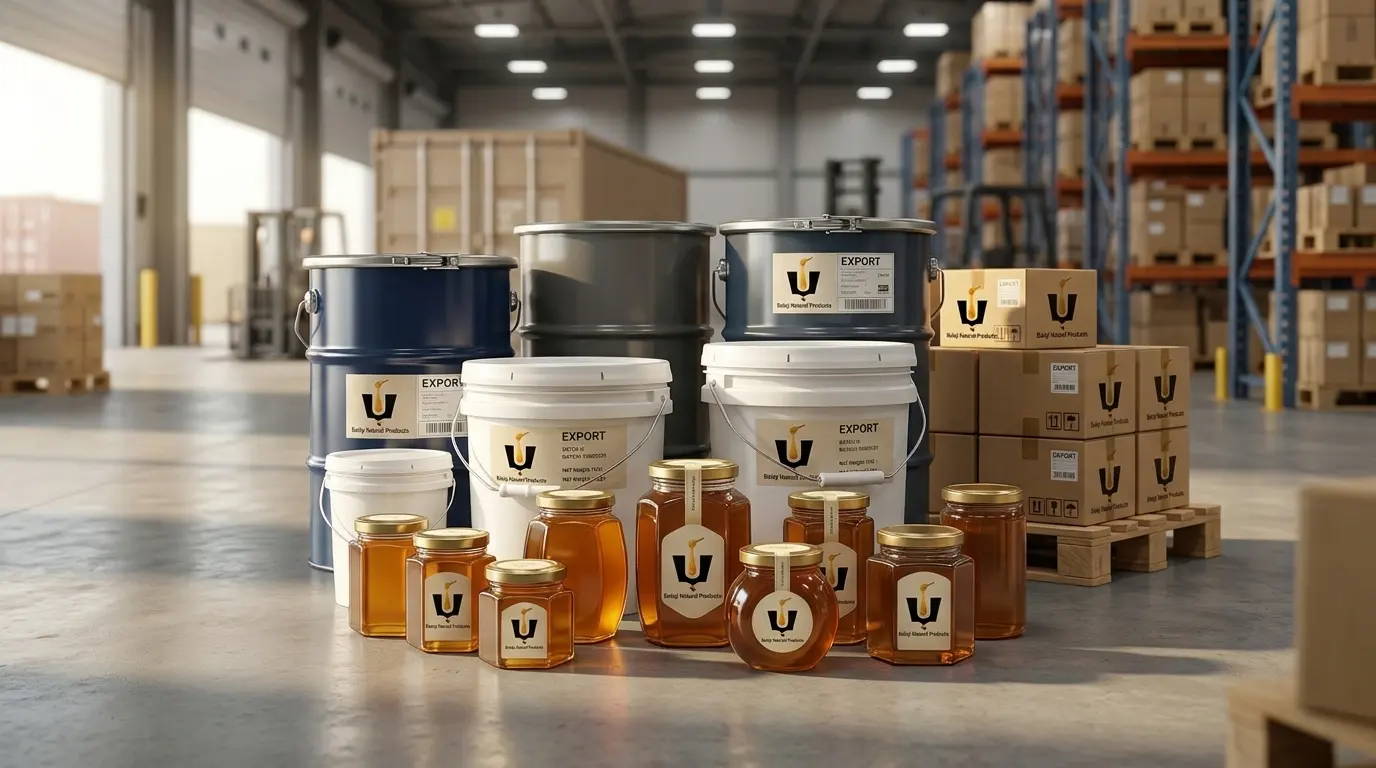
Bulk honey may be supplied in food-grade drums, cans, buckets or other suitable containers.
The selected packaging should protect the product from contamination and moisture exposure.
Before accepting a shipment, warehouse teams should check:
Container material and food-contact suitability.
External condition of the packaging.
Closure and seal integrity.
Signs of leakage or damage.
Product and batch identification labels.
Damaged containers should be isolated for inspection before their contents are accepted into usable inventory.
4. Understand Natural Honey Crystallization
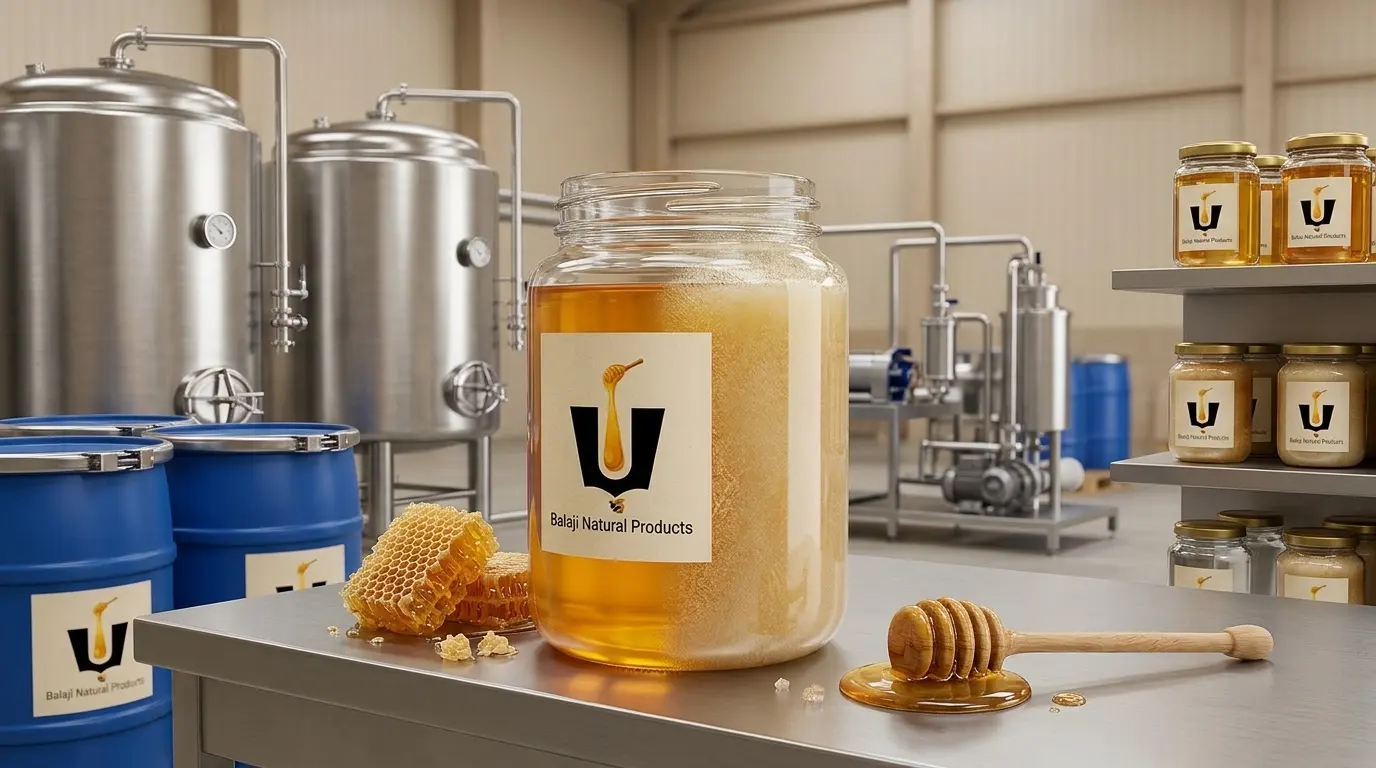
Crystallization is a natural characteristic of honey.
Glucose can separate from the liquid phase and form crystals over time. The speed of crystallization depends on factors such as glucose concentration, moisture content, floral origin and storage temperature.
Some varieties crystallise faster than others.
For example, mustard honey is known for its tendency to crystallise.
Crystallization does not automatically mean that honey has spoiled or become adulterated.
Warehouse and production teams should understand this distinction to avoid unnecessary rejection of acceptable stock.
If liquefaction is required before processing, it should follow an appropriate controlled procedure that avoids excessive heating.
How to Plan Warehouse Space for Honey Inventory
A good warehouse layout helps manufacturers manage large quantities of honey without creating unnecessary handling difficulties.
Storage planning should consider incoming shipments, existing inventory, production requirements and dispatch schedules.
Create Separate Storage Zones
Dividing warehouse space into clearly identified zones improves inventory control.
A practical arrangement may include:
Incoming stock inspection area.
Approved honey storage area.
Quarantine area for unverified batches.
Rejected or damaged stock area.
Production issue area.
Finished goods storage area.
This arrangement helps prevent unapproved or damaged inventory from entering the production process.
It also makes stock identification easier for warehouse employees.
Organise Stock by Honey Variety
Different honey varieties may have different physical characteristics, intended applications and buyer specifications.
Therefore, manufacturers should maintain clear identification for each variety.
For example, separate inventory records may be maintained for:
Sidr honey.
Litchi honey.
Multiflora honey.
Mustard honey.
Eucalyptus honey.
Wildflower honey.
This is particularly important when a manufacturer handles multiple floral origins or customer-specific product specifications.
Honey varieties should not be mixed simply to simplify storage. Any blending must follow the approved product specification and buyer agreement.
Use Clear Container Identification
Every container should carry identification that connects it to the relevant inventory record.
A useful identification system includes:
Product or honey variety.
Batch or lot number.
Supplier identification.
Date of receipt.
Net weight.
Quality inspection status.
Storage location.
Barcode or QR-based identification can also help warehouse teams retrieve information quickly.
FIFO and FEFO: Choosing the Right Stock Rotation Method
Stock rotation helps businesses use inventory in a planned order.
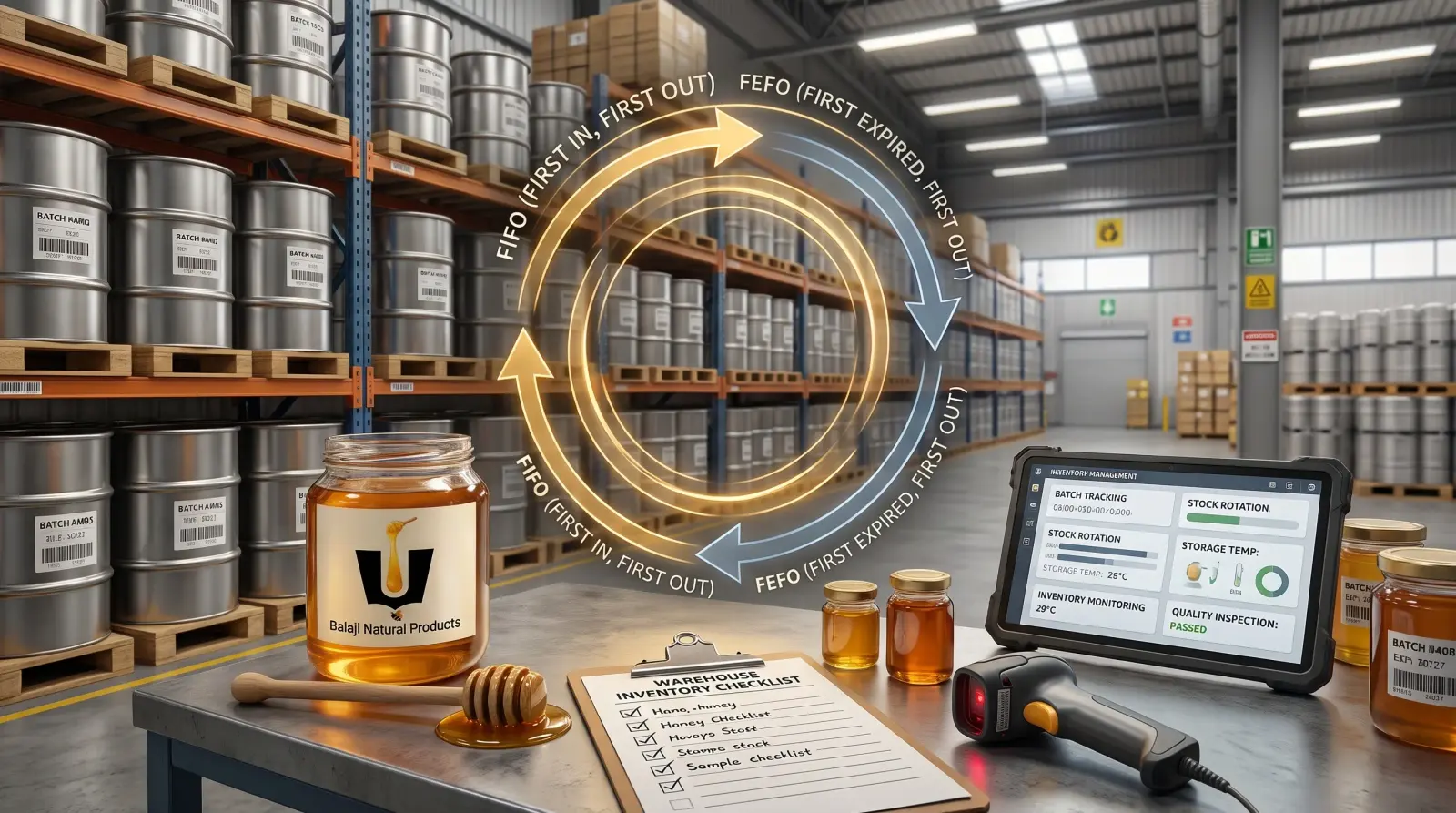
Two commonly used methods are FIFO and FEFO.
First In, First Out (FIFO)
FIFO stands for First In, First Out.
Under this method, the stock received earliest is issued for production first.
For example, if a warehouse receives one batch of multiflora honey in January and another in March, the January batch is generally issued first, provided both batches are approved and suitable for the intended use.
FIFO is useful when managing bulk honey inventory with regular incoming shipments.
It reduces the possibility of older stock remaining unused at the back of the warehouse.
First Expired, First Out (FEFO)
FEFO stands for First Expired, First Out.
Under this method, inventory with the earliest applicable expiry or best-before date is prioritised for use.
For example, if one approved batch has a best-before date in September and another has a date in December, the September batch receives priority.
FEFO is particularly useful when different batches have different shelf-life dates.
Which Method Should Food Manufacturers Use?
Both methods can support effective inventory management.
However, FEFO should take priority when batches have different applicable expiry or best-before dates.
FIFO can be used as a supporting method when dates are identical or when no earlier date requires priority.
Businesses should also consider quality inspection results and customer specifications before issuing any batch.
Building an Effective Honey Inventory Tracking System
A structured inventory tracking system gives manufacturers better visibility into stock availability and movement.
Instead of relying only on handwritten warehouse records, businesses can maintain a centralised digital inventory register.
Track Important Inventory Information
Each inventory entry should contain sufficient information to identify and monitor the batch.
Important details include:
Batch or lot number.
Honey variety.
Supplier name.
Receipt date.
Received quantity.
Available quantity.
Storage location.
Quality approval status.
Best-before or expiry date, where applicable.
Production issue date.
Remaining stock.
These records help purchasing and production teams make better decisions.
Monitor Stock Levels Regularly
Manufacturers should review inventory levels according to production requirements.
Three important inventory concepts can help.
Minimum Stock Level: The lowest quantity that should normally be maintained to avoid supply interruptions.
Reorder Point: The inventory level at which a new purchase order should be initiated.
Safety Stock: Additional inventory maintained to manage unexpected demand or supplier delays.
For example, a food manufacturer consuming 500 kg of honey daily may require a different reorder strategy from a company using only 100 kg per week.
The reorder point should consider average consumption, supplier lead time and the safety stock requirement.
Use Digital Inventory Management Tools
Digital inventory systems can simplify warehouse operations.
Depending on business requirements, manufacturers can use ERP software, warehouse management systems or inventory management applications.
Useful features include:
Real-time stock updates.
Batch-wise inventory tracking.
Barcode scanning.
Purchase order integration.
Stock movement history.
Low-stock notifications.
Expiry and best-before alerts.
Production consumption reports.
Integrating inventory records with production planning can also help businesses estimate future honey requirements.
Managing Quality Checks During Honey Storage
Inventory availability does not automatically mean that a batch is ready for production.
Quality verification should remain part of the warehouse process.
Inspect Incoming Honey Shipments
Every incoming shipment should be checked against the purchase order and agreed product specification.
The receiving team should verify packaging condition, product identity, quantity and batch documentation.
Depending on the purchase agreement, the batch may also require laboratory testing before approval.
Maintain Batch-Wise Quality Records
Quality records should remain connected to individual batches.
Relevant documents may include:
Certificate of Analysis (COA).
Moisture test results.
HMF test results.
Sugar composition reports.
Adulteration screening results, where required.
Residue testing reports, where applicable.
Supplier declarations and traceability records.
A Honey Manufacturer India serving different food industries may need to maintain separate quality requirements for different customers.
Keeping batch-level records makes it easier to identify which inventory meets a particular production specification.
Conduct Periodic Warehouse Inspections
Warehouse inspections help identify potential storage issues before they affect larger quantities of stock.
Inspection teams should look for damaged containers, leakage, moisture exposure, pest activity and unsuitable storage conditions.
They should also verify that approved, quarantined and rejected batches remain properly separated.
Inspection frequency should be defined in the company's food safety and inventory management procedures.
Common Honey Inventory Management Mistakes to Avoid
Even well-organised warehouses can experience inventory problems when storage procedures are not followed consistently.
Some common mistakes include:
1. Overstocking Without Demand Planning
Buying more honey than necessary can increase storage requirements and working capital commitments.
Manufacturers should estimate procurement quantities using production forecasts and expected customer demand.
2. Ignoring Batch Identification
Mixing unidentified containers or losing batch information creates traceability problems.
Every incoming batch should be recorded and linked to its quality documentation.
3. Leaving Containers Open
Unsealed containers can expose honey to moisture, dust and other contaminants.
Always close containers properly after sampling or production use.
4. Using FIFO Without Checking Expiry Dates
FIFO alone may not be sufficient when different batches have different best-before dates.
Manufacturers should apply FEFO wherever applicable and verify batch suitability before issuing stock.
5. Ignoring Natural Crystallization
Treating every crystallised batch as defective can lead to unnecessary losses.
Crystallization should be assessed in relation to the honey variety, product specification and actual quality condition.
How a Reliable Honey Supplier Supports Better Inventory Planning
Inventory management depends not only on warehouse procedures but also on supplier coordination.
A reliable supplier should provide clear information about product varieties, packaging options, batch identification and agreed quality documentation.
For businesses sourcing from a Honey Manufacturer India, consistent communication can make procurement planning easier.
Before finalising a supply arrangement, food manufacturers should consider:
Availability of required honey varieties.
Bulk packaging options.
Batch-specific quality documentation.
Agreed delivery schedules.
Product specifications.
Traceability information.
Ability to support recurring orders.
Balaji Natural Products supplies bulk honey in drums, cans and buckets for manufacturers, packers and importers.
Its product range includes Sidr, Litchi, Multiflora, Mustard, Eucalyptus and other honey varieties.
Businesses can explore the available options and discuss their requirements before planning procurement.
[Internal Link: Explore Bulk Honey Supply and Packaging Options at Balaji Natural Products]
Conclusion
Effective honey inventory management is an important part of food manufacturing operations.
Suitable storage conditions, proper container selection, warehouse organisation and batch-level traceability help protect product quality.
FIFO and FEFO stock rotation methods also support better stock movement and reduce the risk of inventory remaining unused for extended periods.
For food businesses working with a Honey Manufacturer India, inventory planning should begin with clear procurement requirements and continue through storage, inspection and production.
A structured inventory system helps purchasing, warehouse and quality teams work with accurate stock information.
Planning bulk honey procurement for your manufacturing business? Contact Balaji Natural Products to discuss honey varieties, packaging requirements and recurring bulk supply needs.