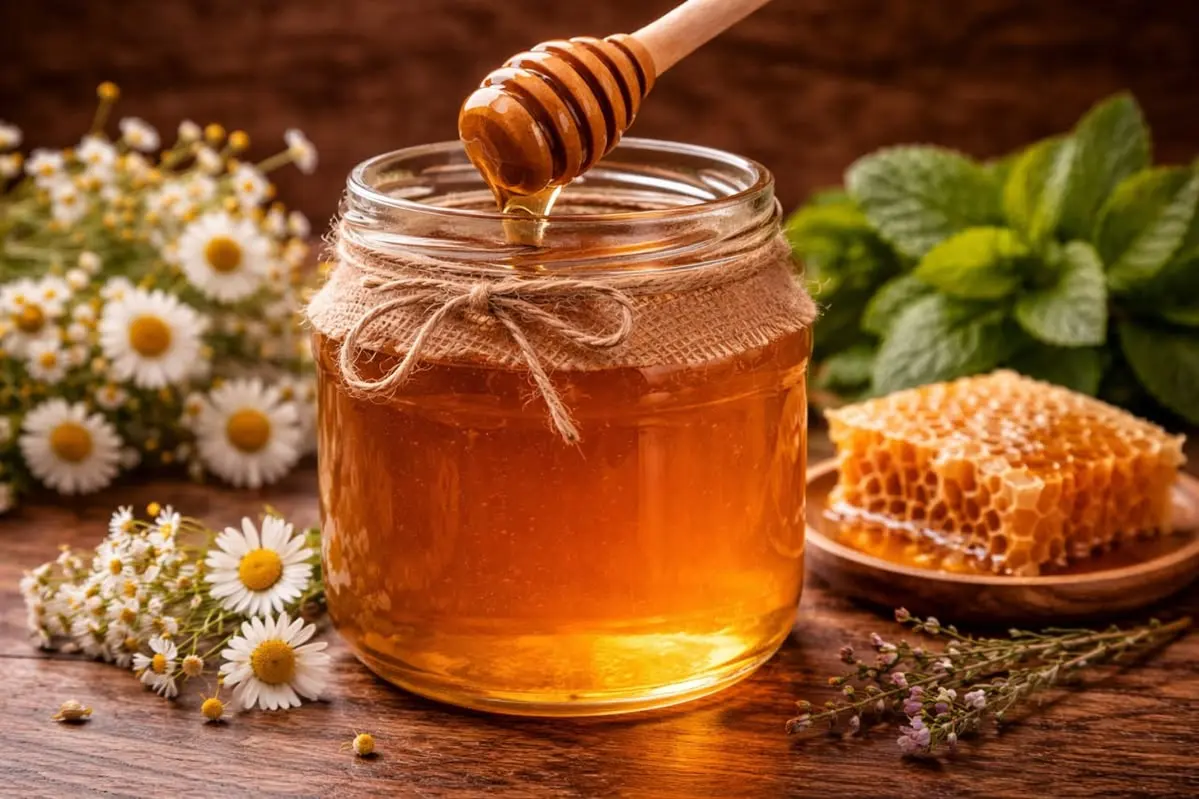
Honey is widely used in households, bakeries, food processing units, beverage production, and various food manufacturing applications. However, not all honey products undergo the same handling and processing methods. Understanding natural honey vs processed honey can help consumers and businesses make informed purchasing decisions.
A reliable Honey Manufacturer India should help buyers understand how honey is collected, filtered, handled, tested, and packed. These factors can influence the honey's colour, flavour, texture, aroma, and suitability for different applications.
Natural honey is produced by bees from floral nectar or other permitted natural sources. After harvesting, it may be filtered, warmed, or processed to varying degrees. The term "processed honey" generally refers to honey that has undergone additional handling, such as controlled heating, fine filtration, or other treatments.
The important point is that processing does not automatically mean honey is adulterated or poor quality. The methods used, the quality of the original honey, and the final product's specifications all matter.
For businesses purchasing honey in large quantities, understanding these differences is especially important.
What Is Natural Honey?
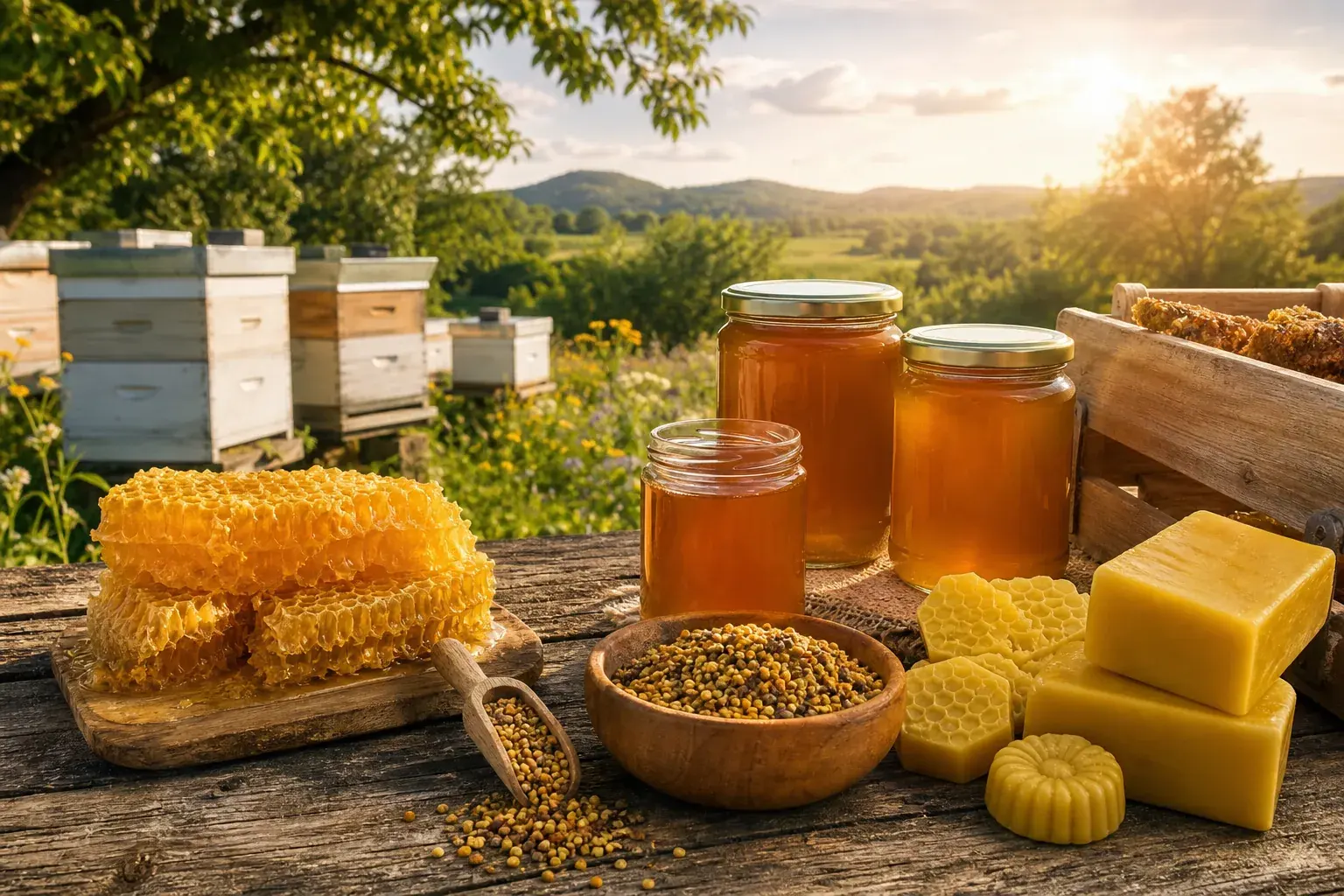
Natural honey is a sweet substance produced by honeybees from floral nectar or other natural sources. Bees transform the collected material through enzymatic activity and store the resulting honey in honeycomb cells.
After harvesting, honey can retain different levels of pollen, natural aroma compounds, and other components, depending on its floral source and handling.
Natural honey can vary considerably in appearance and taste. Some varieties are light and mild, while others are darker, stronger, or more aromatic.
Common Characteristics of Natural Honey
Natural honey may have the following characteristics:
Distinctive flavour: The taste depends on the flowers visited by the bees and the honey's origin.
Natural colour variations: Honey can range from pale gold to amber or dark brown.
Different textures: Some honey remains fluid, while other varieties crystallise over time.
Characteristic aroma: Floral sources influence the honey's natural fragrance.
Variable crystallisation: Glucose concentration, temperature, and other factors affect how quickly crystals form.
These characteristics are not identical in every batch. Natural variation is normal, so colour or texture alone cannot establish whether honey is genuine.
Does Natural Honey Always Mean Raw Honey?
No. Natural honey and raw honey are related terms, but they are not necessarily interchangeable.
Raw honey is generally understood to mean honey that has undergone limited processing. However, the precise meaning of "raw" can vary between sellers and markets.
Natural honey may be strained or filtered to remove unwanted particles. It may also receive controlled warming to make handling and packaging easier.
Therefore, buyers should ask manufacturers about the actual processing methods used rather than relying only on terms such as "natural" or "raw" on a label.
Crystallisation is a natural process in which glucose forms crystals within honey.
It is affected by the glucose-to-water ratio, temperature, the presence of small particles, and the honey's floral origin.
Crystallisation does not automatically indicate adulteration, spoilage, or poor quality. Some varieties crystallise quickly, while others remain liquid for longer periods.
What Is Processed Honey?
Processed honey is honey that has undergone one or more additional steps after harvesting. These steps may include controlled warming, filtration, blending, moisture management, and packaging preparation.
The exact process depends on the manufacturer's equipment, product specifications, intended application, and customer requirements.
Processing is often used to improve handling, achieve a more uniform appearance, or meet specific commercial requirements.
Common Processing Methods
1. Controlled heating
Honey may be warmed to reduce its viscosity, making it easier to transfer through processing equipment and fill containers.
Excessive heat or prolonged exposure can affect certain heat-sensitive components and alter flavour or aroma. The impact depends on the temperature, duration, and original condition of the honey.
2. Filtration
Filtration removes unwanted particles and, depending on the method, may also remove some pollen.
Coarse filtration and very fine filtration are different processes. Buyers should confirm the filtration method if pollen content or the level of processing is important to their product requirements.
3. Blending
Manufacturers may blend honey from different batches or floral sources to achieve a more consistent colour, flavour, or specification.
Blending can be useful for businesses that require predictable product characteristics across multiple orders. The source and composition of the honey should still be accurately represented.
4. Moisture management
Honey moisture content is an important quality parameter. Excess moisture can increase the risk of fermentation under unsuitable storage conditions.
Manufacturers may assess moisture content and manage the product according to appropriate quality and food safety requirements.
5. Packaging and quality checks
Honey may be packed in jars, food-grade buckets, cans, or drums, depending on the intended market.
Appropriate packaging helps protect the product during storage and transportation. Quality checks can also help identify inconsistencies before dispatch.
Natural Honey vs Processed Honey: Key Differences
The difference between natural honey and processed honey depends on the methods applied after harvesting. The following comparison explains the main considerations.
1.Filtration: Minimally processed honey may retain more pollen and fine particles, while more intensively processed honey may undergo finer filtration.
2.Heating: Minimally processed honey may receive little or no heating, whereas more intensively processed honey may undergo controlled heating.
3.Appearance: Minimally processed honey may show more natural variation in colour and clarity, while more intensively processed honey may have a more uniform appearance.
4.Flavour and Aroma: Minimally processed honey may retain more characteristics of its floral source. More intensive processing may change its flavour and aroma, depending on the methods used.
5.Texture: Minimally processed honey may crystallise naturally over time. Processing may delay visible crystallisation in some cases.
6.Batch Consistency: Minimally processed honey can vary between harvests, while more intensively processed honey may be blended to achieve greater consistency.
7.Commercial Suitability: Both types can be suitable for commercial use, depending on the intended application, handling requirements, and product specifications.
Neither category is automatically superior for every purpose. The best choice depends on the honey's verified quality, the buyer's requirements, and how the product will be used.
How Processing Can Affect Honey Quality
Processing can influence certain physical and chemical properties of honey. Understanding these effects helps buyers assess product suitability.
Heating and Heat-Sensitive Components
Honey naturally contains enzymes and other compounds that can be affected by heat.
Excessive heating or extended storage at elevated temperatures may increase hydroxymethylfurfural (HMF) levels and reduce the activity of certain enzymes.
HMF is one parameter used in honey quality assessment. Its interpretation depends on applicable standards, the honey's origin, and its storage and processing history.
Controlled warming does not necessarily make honey unsuitable. The important factors are the conditions used and whether the final product meets the relevant quality requirements.
Filtration and Pollen Content
Filtration can improve visual clarity by removing particles. However, very fine filtration may also remove much of the pollen naturally present in honey.
Pollen analysis can provide useful information about botanical or geographical origin, although results need expert interpretation and may be affected by processing.
For buyers who require information about floral origin, it is worth discussing filtration specifications with the manufacturer before placing an order.
Moisture Content and Storage
Moisture content affects honey stability. Honey with excessive moisture may be more vulnerable to fermentation, particularly when storage conditions are unsuitable.
A manufacturer should be able to explain its moisture testing procedures and any applicable product specifications.
Correctly sealed packaging and suitable storage conditions are also important for maintaining product quality.
Is Processed Honey Less Healthy Than Natural Honey?
The answer depends on the product and the processing conditions.
Honey is primarily composed of sugars, including fructose and glucose. It also contains smaller quantities of other compounds, which vary according to floral source and handling.
Some processing methods can reduce certain heat-sensitive components. Fine filtration can remove pollen. However, these differences do not automatically establish that every minimally processed honey provides greater health benefits than every processed honey.
Honey remains a source of free sugars, regardless of whether it is marketed as natural, raw, or processed. It should therefore be consumed in moderation.
Honey should not be given to infants under 12 months because of the risk of infant botulism.
Consumers should evaluate honey based on reliable product information rather than broad health claims or marketing terminology.
How to Identify Quality Honey
Appearance alone cannot reliably confirm the authenticity or quality of honey. Genuine honey can differ significantly in colour, viscosity, aroma, and crystallisation behaviour.
For consumers and commercial buyers, a more reliable approach involves checking the product's documentation, traceability, and applicable quality parameters.
Check the Product Label
Review the ingredient declaration, manufacturer details, batch information, packaging date, and storage instructions.
For products sold in India, check the applicable labelling and regulatory requirements. Buyers should also verify any specific claims made about raw, organic, unheated, or single-floral honey.
Ask About Quality Testing
Depending on the product and intended application, relevant tests may include:
Moisture content.
HMF levels.
Diastase activity.
Sugar profile.
Acidity.
Adulteration screening.
Pollen analysis, where relevant.
Microbiological or other safety checks, where appropriate.
The required tests depend on the applicable standards, customer specifications, and intended market. No single test can establish every aspect of honey quality.
Verify Traceability
Traceability helps buyers understand where a batch originated and how it moved through the supply chain.
Ask whether the supplier can provide batch identification, relevant test reports, product specifications, and information about sourcing and handling.
For businesses importing or exporting honey, documentation should also match the destination market's requirements.
Choosing a Honey Manufacturer India for Bulk Requirements
Businesses purchasing honey in large quantities need to consider more than the product's appearance or price.
A dependable Honey Manufacturer India should be able to explain its sourcing practices, processing methods, quality control procedures, and packaging options.
The right supplier can help food processors, distributors, bakeries, beverage companies, and private-label brands manage product consistency and purchasing requirements.
1. Evaluate Product Specifications
Before requesting a quotation, define your requirements.
These may include the desired colour, flavour profile, moisture limits, filtration level, packaging format, and applicable quality standards.
Clear specifications help suppliers determine whether they can provide a suitable product.
2. Ask About Bulk Packaging
Bulk honey may be supplied in food-grade buckets, cans, or drums, depending on the supplier's available formats and the buyer's needs.
Packaging should be suitable for food contact and compatible with the expected storage and transportation conditions.
Confirm the available pack sizes, minimum order quantity, lead time, and delivery arrangements before finalising an order.
3. Request Relevant Documentation
Ask for a product specification sheet and a certificate of analysis where available.
You should also verify the manufacturer's relevant licences, registrations, certifications, and export documentation, as applicable to the transaction.
For international shipments, confirm the importing country's requirements before dispatch.
4. Compare Suppliers Beyond Price
A lower quotation may not represent the best overall value if specifications, documentation, packaging, or delivery reliability do not meet your requirements.
Compare suppliers using consistent criteria, including product quality, testing, traceability, order flexibility, and supply capacity.
Businesses seeking a Honey Manufacturer India should also clarify how the supplier handles variations between batches and manages quality concerns.
Why Choose Balaji Natural Products for Honey Supply?
Balaji Natural Products serves bulk honey and private-label requirements, with packaging options that may include buckets, cans, and epoxy-coated drums, depending on the product and order specifications.
For businesses looking for a honey supply partner, discussing the intended application and required product characteristics is a useful starting point.
Buyers can enquire about available honey varieties, packaging formats, order quantities, quality documentation, and delivery requirements.
The suitability of any product should be confirmed against the buyer's specifications and the supplier's current capabilities before an order is placed.
Explore the [Internal Link to relevant Balaji Natural Honey page: Bulk Honey Supply] to learn more about bulk purchasing options, or contact the team to discuss your requirements.
Frequently Asked Questions
What is the main difference between natural honey and processed honey?
Natural honey describes honey produced by bees from natural sources, while processed honey has undergone additional handling, such as heating or fine filtration. The degree of processing varies, so product specifications are important.
Is raw honey the same as natural honey?
Not necessarily. Raw honey generally refers to honey that has undergone limited processing, while natural honey may still be filtered, warmed, or handled using other methods.
Does crystallised honey mean it is fake?
No. Crystallisation is a natural characteristic of many genuine honeys. It depends on factors such as sugar composition, temperature, and floral origin.
Which honey is suitable for food manufacturing?
The suitable product depends on the intended application. Food manufacturers should assess flavour, colour, moisture content, processing requirements, packaging, and applicable quality standards before selecting a supplier.
How can businesses choose a bulk honey supplier in India?
Businesses should evaluate product specifications, quality testing, traceability, packaging options, order quantities, delivery reliability, and relevant documentation. Comparing suppliers against the same requirements makes the selection process more effective.
Exploring Natural Honey for Bulk Business Requirements
For food manufacturers, distributors, bakeries, and private-label brands, finding a consistent source of natural honey is an important part of maintaining product quality. Working with an experienced honey supplier can help businesses explore suitable honey varieties, bulk packaging options, and quality documentation according to their requirements.
Businesses looking to expand their product range with natural honey can explore the offerings of Balaji Natural Honey to learn more about honey varieties, sourcing, and industry applications. Discussing your volume requirements and product specifications with a supplier can help you identify an appropriate solution for your business.
Final Thoughts
Understanding natural honey vs processed honey helps consumers and businesses make better-informed purchasing decisions. Processing methods can affect honey's appearance, texture, aroma, and certain quality parameters, but processing alone does not determine whether a product is genuine or suitable for a particular application.
The most useful approach is to assess the honey's origin, handling, testing, traceability, and compliance with relevant standards.
For commercial buyers, working with a transparent supplier can make it easier to define specifications and maintain consistency across orders.
Balaji Natural Products welcomes enquiries from businesses interested in bulk honey and private-label supply. Discuss your requirements with the team to explore suitable products and packaging options.
External resource: For additional information on honey standards and quality parameters, consult the Codex Alimentarius Commission's standards and guidance.
Suggested internal link: [Internal Link to relevant Balaji Natural Honey page: Bulk Honey Supply or Contact Us]