Honey that leaves the hive in perfect condition can still arrive at your plant spoiled. Too much heat, moisture pickup, contamination or careless blending can all change a lot between raw honey and the finished drum.
That is why quality control inside the processing plant matters as much as the honey itself. When you approve a Honey Manufacturer India, you are really approving its process: how it receives, tests, treats, fills and releases every lot.
This guide follows honey through each stage of bulk processing. It explains the main risk at each step, the control that manages it, and the questions buyers should ask during a supplier audit.
Why Honey Quality Control Matters in Bulk Processing
Honey is a natural product with a few sensitive properties. It absorbs moisture from the air, it changes when heated, and it picks up odours and taints easily.
The international Codex Standard for Honey reflects these risks. It says honey must not be heated or processed so much that its essential composition changes or its quality is impaired. It also says honey must not absorb objectionable flavours or taints during processing and storage.
Good honey quality control protects:
Purity, by keeping foreign sugars and contaminants out
Freshness, by limiting heat damage
Consistency, so every lot matches the approved specification
Traceability, so any issue can be traced to its source
Compliance with FSSAI and importing-country rules
Honey Processing Steps: Where Quality Is Controlled
Bulk honey processing usually follows a sequence like the one below. Each plant's exact flow differs, but the control points are similar.
Step 1: Raw Honey Testing at Intake
Quality control starts before honey enters the plant. Each incoming batch from beekeepers or collectors should be sampled and checked before it is accepted.
Common intake checks include:
Moisture content, since high moisture raises fermentation risk. Both Codex and FSSAI set a general maximum of 20%.
Colour, aroma and taste, compared with the expected floral source
Visible contamination, such as wax, debris or bee parts
Signs of fermentation, such as foam or a sour smell
Screening for adulteration, using sugar profile and other tests
Batches that fail are held or rejected, not blended in. Each accepted batch receives an identity so it can be traced later.
Step 2: Segregation and Storage of Raw Honey
Accepted honey should be stored by floral source and batch, in clean, closed, food-grade containers. The storage area should be cool, dry and away from strong-smelling materials.
Keeping floral lots separate matters. Once a single-flower honey is mixed with others, it can no longer be sold as that variety, and its traceability becomes harder.
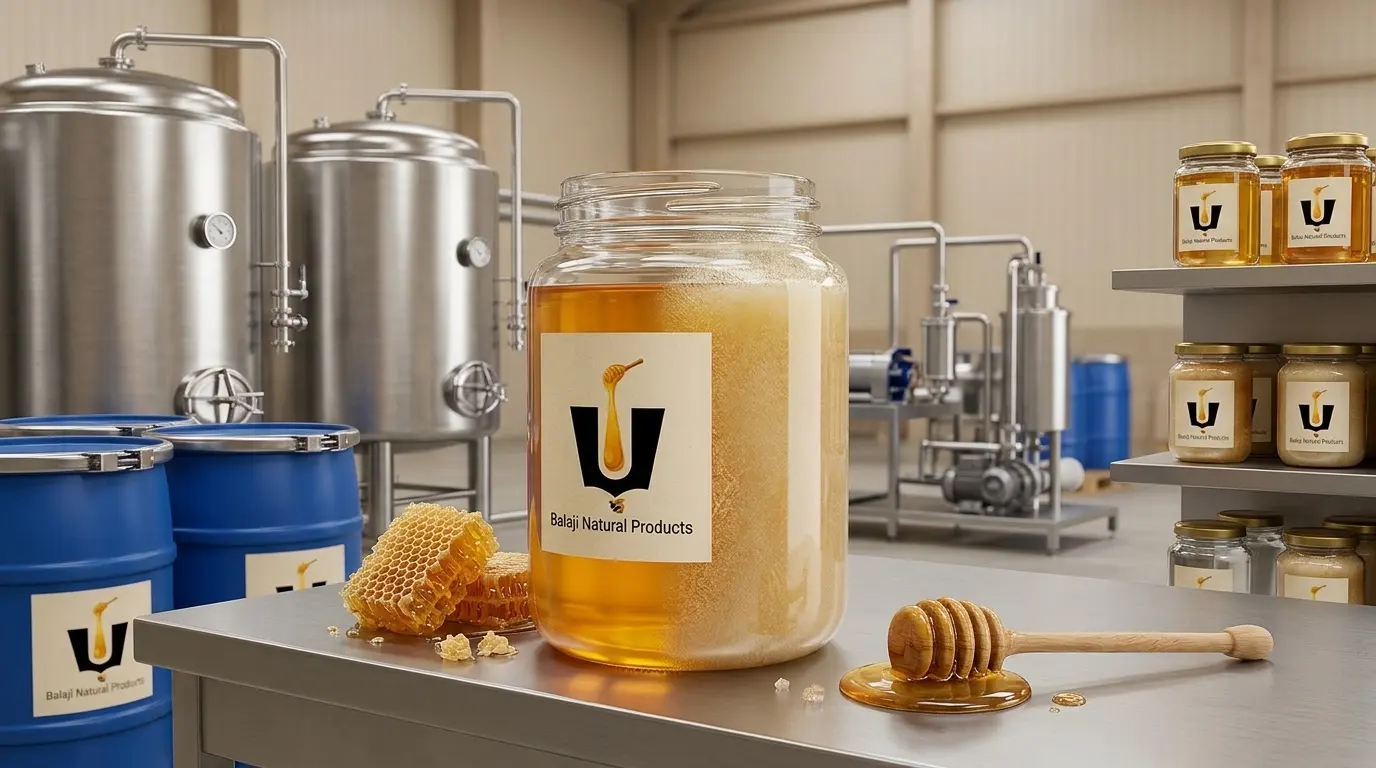
Step 3: Gentle Warming and Liquefying
Many honeys crystallise naturally, so processors warm honey to make it flow for straining and filling. This is one of the highest-risk steps.
Excess or prolonged heat raises HMF (hydroxymethylfurfural) and reduces diastase, a natural enzyme. Both are recognised indicators of heat damage. The Codex annex suggests HMF of no more than 40 mg/kg after processing, or 80 mg/kg for honey from tropical regions.
Good control means using the lowest effective temperature for the shortest time, and recording temperatures and times for each batch.
Step 4: Straining and Filtration
Straining removes wax particles, debris and other visible impurities. It should improve cleanliness without stripping honey of its natural character.
Codex requires that honey filtered so heavily that significant pollen is removed must be labelled "filtered honey". Heavy filtration can also make it harder to verify a honey's floral and geographic origin. Buyers should ask what mesh or filter size a plant uses.
Step 5: Blending to Specification
Blending combines batches to achieve a consistent colour, flavour and moisture level. It is useful for multiflora honey, but it must be controlled.
Good blending practice includes:
Blending only batches that have already passed intake tests
Blending only when the order calls for a blend
Recording which batches went into each blend
Matching the blend against an approved reference sample or colour band
Codex also states that chemical or biochemical treatments must not be used to influence crystallisation.
Step 6: In-Process Testing
Before filling, the finished lot is tested against the buyer's specification. Typical parameters include moisture, sugars, HMF and colour. Additional screens such as residue testing or NMR are added when the contract requires them.
An in-house laboratory allows fast routine checks. Independent accredited laboratories are often used for contract tests and export documentation.
Step 7: Filling and Honey Packaging Quality Checks
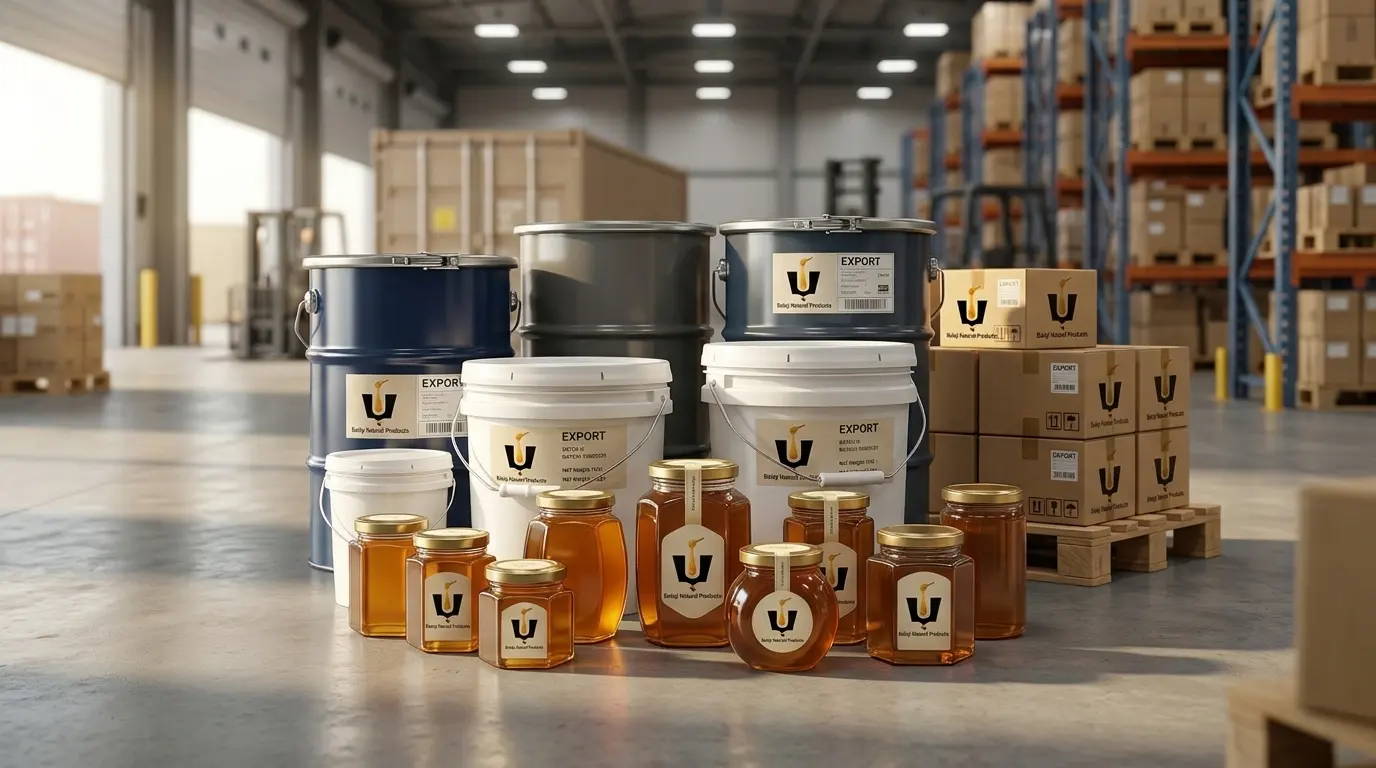
Filling is where honey meets its container, so hygiene and accuracy matter. A Bulk Honey Supplier India filling drums, cans or buckets should check:
Container suitability: food-grade material and, for metal drums, a proper internal lining
Container cleanliness, before filling
Fill weight, against the declared net weight
Seal integrity, with tight, tamper-evident closures
Headspace and filling temperature, to limit moisture and quality changes
For retail and private-label jars, label checks are just as important. Floral names, "raw", "organic" or "NMR tested" claims must match evidence for that specific lot.
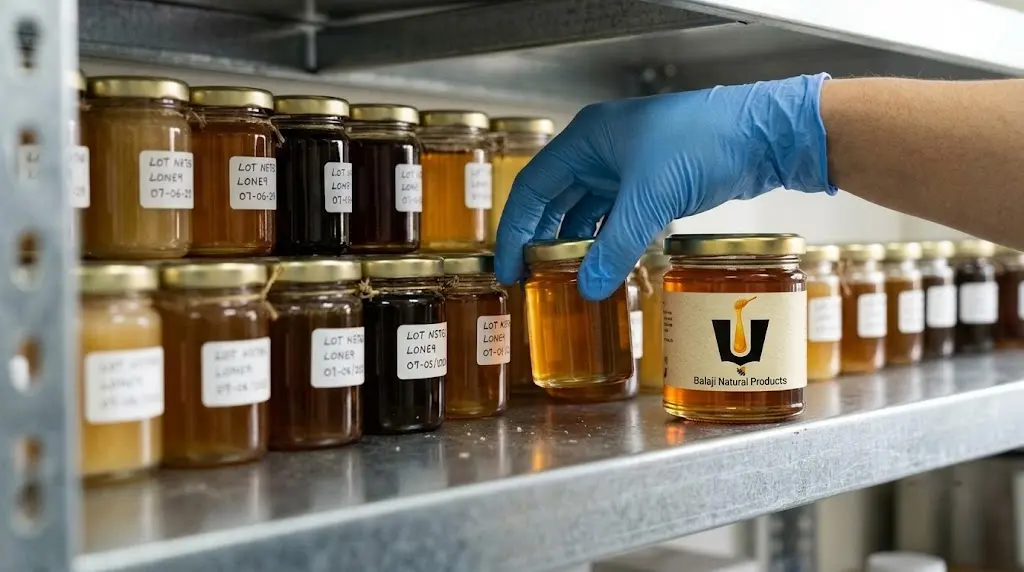
Step 8: Lot Coding, Labelling and Retained Samples
Every container should carry a clear lot code. Codex requires bulk honey containers to show at least the product name, lot identification, and the name and address of the producer, processor or packer.
The plant should also keep a retained sample from each lot. If a buyer raises a concern later, the retained sample allows the plant to retest the honey as it was when it was packed.
Step 9: Final Release and Documentation
A lot should be released only when all tests are complete and the results meet the specification. The release file usually includes the certificate of analysis, the packing list and any market-specific documents.
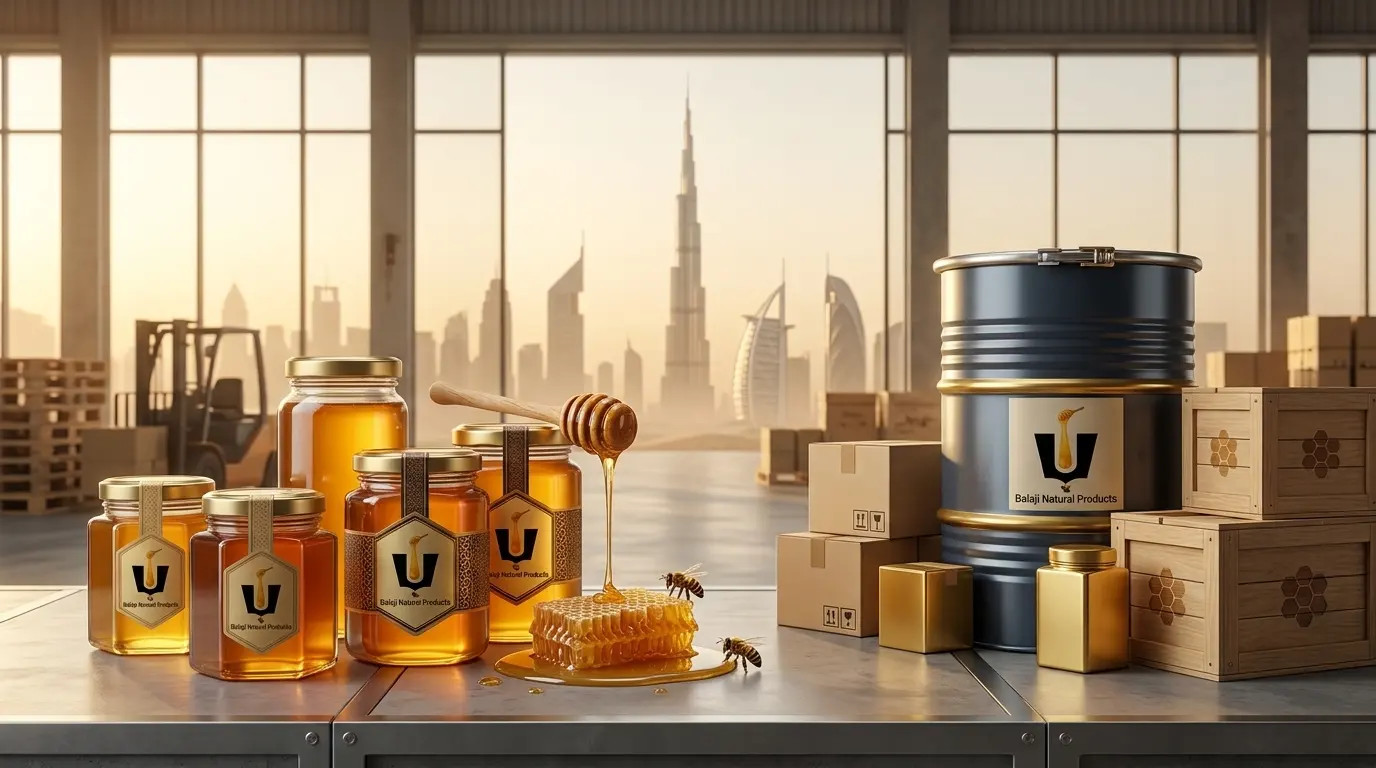
For overseas shipments, a Honey Exporter India adds export documents and destination-specific certificates before the container is booked.
Common Quality Control Failures and How to Prevent Them
Overheating to speed up processing. Prevent it with temperature limits and batch records.
Mixing untested batches into a blend. Prevent it with an intake hold until tests are complete.
Moisture pickup in humid storage. Prevent it with closed containers and controlled storage.
Wrong or unsupported label claims. Prevent it by checking claims against lot evidence before printing.
Missing lot codes or records. Prevent it with mandatory coding at filling and a document check at release.
How to Audit a Honey Supplier's Quality Control
Whether you visit in person or audit remotely, ask a Honey Supplier India these questions:
1.How do you test and accept raw honey at intake?
2.How are floral lots kept separate in storage?
3.What temperature and time limits apply to warming, and are they recorded?
4.What filtration or straining method do you use?
5.When and how do you blend, and what records are kept?
6.Which tests are run on every lot, and which only on request?
7.How do you code lots and keep retained samples?
8.Which facility certifications cover the plant, and are they current?
Facility certifications such as FSSC 22000, BRCGS or HACCP show how a plant is managed. They do not replace the test results for your specific lot, so ask for both.
Conclusion
Honey quality is decided as much by processing as by sourcing. Strong control at intake, storage, warming, filtration, blending, testing, filling and release keeps honey pure, fresh, consistent and traceable.
When you choose a Honey Manufacturer India, look beyond the certificate on the wall. Ask how each stage is controlled, what is recorded and which tests travel with your lot.
Balaji Natural Products processes honey at its Sonipat, Haryana plant, supported by an in-house laboratory. Floral lots are kept distinct, and multiflora is blended only when that is what the order asks for. Share your honey, specification and quantity to request a quotation. [Contact: Balaji Natural Products]