Order too little honey and your production line stops. Order too much and you tie up cash, fill your warehouse and risk quality loss before you use it all.
Getting the quantity right is one of the most useful things you can do before contacting a Honey Supplier India. A clear number makes quotations faster, helps your supplier plan production, and protects your own margins.
This guide shows how to calculate bulk honey requirements step by step, with a worked example you can adapt to your own business.
Why Accurate Honey Planning Matters
Honey is a natural product. Supply varies by season and floral source, and a specific variety may not always be available at short notice.
Poor planning leads to familiar problems:
Stock-outs that halt production or force emergency purchases at higher prices
Overstock that ties up working capital and storage space
Quality loss if honey sits too long in poor conditions, especially after a container is opened
Inconsistent product if you have to switch to a different honey mid-run
Good honey procurement planning avoids all four.
What You Need Before You Start
Gather these numbers first. Most come from your production and sales records.
Products that use honey and the honey quantity in each unit or batch
Production volume per day, week or month for each product
Production days per month
Process loss and wastage, such as honey left in drums, pipes and mixing tanks
Expected growth or seasonal peaks, such as festive demand
Supplier lead time from order confirmation to delivery
Pack size you plan to buy, such as drums, cans or buckets
How to Calculate Bulk Honey Requirements: Step by Step
Follow these six steps in order.
Step 1: Find Honey Usage per Product
Start with your recipe or formulation. Work out how much honey goes into one unit or one batch.
If your recipe lists honey by percentage, multiply the batch weight by that percentage. For example, 500 kg of cookie dough with 8% honey uses 40 kg of honey.
If your recipe measures honey in litres, convert to kilograms. Honey is much denser than water, at roughly 1.4 kg per litre, though the exact figure varies with moisture content and temperature. For accuracy, weigh a known volume of the honey you actually use.
Step 2: Calculate Daily or Monthly Base Usage
Multiply honey per unit by the number of units you produce. Add the totals for every product.
Base usage = honey per unit × units produced (for each product, then add together)
Step 3: Add Process Loss and Wastage
Some honey always stays behind in drums, pumps, pipes and tanks. Thick or crystallised honey leaves more residue.
Check your past records to find your actual loss rate. Many businesses use a small allowance, often a few percent, until they have real data.
Adjusted usage = base usage × (1 + wastage rate)
Step 4: Adjust for Growth and Seasonality
If you expect higher sales, such as during festivals, a new product launch or a new retail listing, increase your estimate for that period.
Planned usage = adjusted usage × (1 + expected growth)
Step 5: Add Safety Stock
Safety stock is a buffer that protects you from delays, sudden orders or quality holds. It is usually expressed as a number of days of usage.
Safety stock = daily planned usage × buffer days
Businesses with longer or less predictable lead times, such as imported honey, usually keep more buffer days.
Step 6: Set Your Reorder Point
Your reorder point tells you when to place the next order, before stock runs low.
Reorder point = (daily planned usage × lead time in days) + safety stock
When your stock falls to this level, place your next order.
Worked Example: A Mid-Sized Bakery
Here is how the formula works for a bakery making two honey products, 26 production days a month.
Step 1 and 2: base usage
Honey wheat bread: 2,000 loaves a day × 25 g honey = 50 kg a day
Honey cookies: 500 kg of dough a day × 8% honey = 40 kg a day
Total base usage: 90 kg a day
Step 3: add 3% process loss
90 kg × 1.03 = 92.7 kg a day
Step 4: add 10% for a festive month
92.7 kg × 1.10 = about 102 kg a day
Monthly need: 102 kg × 26 days = about 2,650 kg
Step 5: safety stock of 10 production days
102 kg × 10 = 1,020 kg
Step 6: reorder point with a 15-day lead time
(102 kg × 15) + 1,020 kg = 2,550 kg
So the bakery should place its next order when stock falls to about 2,550 kg. It should order roughly one month's need each time.
The figures above are illustrative. Use your own recipes, loss rates and lead times.
Converting Your Bulk Honey Order Quantity into Packs
Suppliers sell honey in fixed pack sizes, so round your requirement to whole packs.
In the example, the bakery needs about 2,650 kg. If it buys 300 kg drums:
2,650 ÷ 300 = 8.8 drums
Round up to 9 drums = 2,700 kg
The extra 50 kg simply adds to safety stock
When you choose packs, also consider:
Handling equipment: large drums need a forklift or drum handler, while cans and buckets can be moved by hand.
Usage speed after opening: pick a pack you can empty while the honey is still in good condition.
Storage space: count how many drums or cans your warehouse can hold safely.
Minimum order quantity: a Bulk Honey Supplier India may set a minimum based on honey variety, pack and destination.
Factors That Can Change Your Calculation
Review your numbers regularly. These factors often shift requirements:
Seasonal availability of certain floral varieties
Recipe changes or new products
Changes in lead time, especially for imported shipments from a Honey Exporter India
Storage conditions, since hot or humid storage shortens the safe holding period
Price changes, which may tempt you to buy ahead, but only if you can store honey properly
Tips for Smarter Honey Procurement Planning
Track actual usage monthly and compare it with your forecast. Adjust wastage and buffer days with real data.
Share a forecast with your supplier. A Honey Manufacturer India can plan sourcing and production better when it knows your expected volumes in advance.
Lock your specification. Agree the variety, colour range and tests so every order matches.
Keep a retained sample from each lot to compare future deliveries.
Use first-in, first-out stock rotation.
Plan festive peaks early, before supply tightens.
Conclusion
Calculating bulk honey requirements is simple once you break it into steps: usage per product, base usage, wastage, growth, safety stock and reorder point. Then round the result to practical pack sizes.
A clear number helps you avoid stock-outs and overstock, protects quality and makes your conversations with a Honey Supplier India faster and more productive.
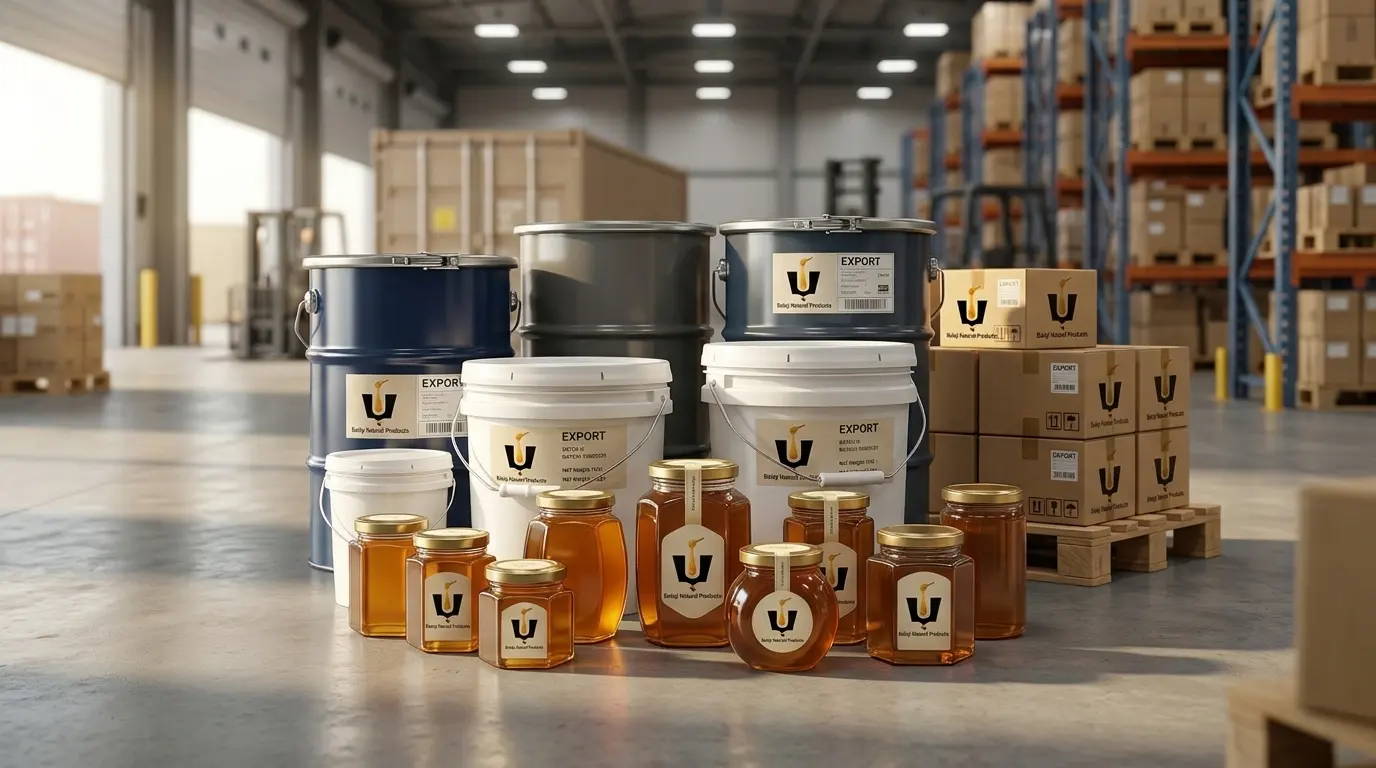
Balaji Natural Products supplies bulk honey in 300 kg drums, 50 kg and 65 kg cans, and food-grade buckets from 1.5 kg to 30 kg, with the minimum order confirmed on each quotation. Share your honey variety, pack and estimated monthly quantity to request a quotation. [Contact Us: Balaji Natural Honey]