Honey is a stable food, but it is not indestructible. Moisture, heat, contamination and rough handling can all change its quality between the plant and your production line.
That is why packaging deserves as much attention as price. When you buy from a Bulk Honey Supplier India, the pack you choose affects shelf life, transport cost, handling time on your floor and even what reaches your customers.
This guide explains how to choose bulk honey packaging for storage, transportation and industrial use, and what to confirm with your supplier before you order.
Why Honey Packaging Matters
Honey has three properties that make packaging important.
It absorbs moisture. Honey is hygroscopic, which means it pulls water from humid air. If water content rises too far, yeasts can start fermentation. The international Codex Standard for Honey sets a general limit of 20% moisture.
It reacts to heat. High temperatures raise HMF (hydroxymethylfurfural), darken colour and reduce enzyme activity. Codex states that honey should not be heated or processed to the point where its quality is impaired.
It picks up odours and taints. Codex also says honey must not absorb objectionable flavours or taints during processing and storage. A poor container, or storage next to strong-smelling goods, can ruin a lot.
Good packaging protects against all three.
Common Bulk Honey Packaging Options
Each format suits a different buyer and use. Here is how the main options compare.
Lined steel drum
Typical size: around 300 kg
Best for: food manufacturers, packers and export
Watch out for: it needs a forklift or drum handler and must be lined
Metal can
Typical size: around 50–65 kg
Best for: smaller industrial lots and some export markets
Watch out for: dents in transit; check the lining and seals
Food-grade plastic bucket
Typical size: around 1.5–30 kg
Best for: kitchens, bakeries, HORECA and small batches
Watch out for: less suited to long sea journeys in heat
Open-top drum
Typical size: around 50 kg
Best for: thick or crystallised honey that needs easy scooping
Watch out for: the lid seal must be tight
Glass or PET jar
Typical size: retail sizes
Best for: private label and retail
Watch out for: not a bulk storage format
Steel Drums for Industrial Volumes
Large steel drums are the standard for industrial honey. They stack well on pallets, travel efficiently in containers and suit automated pumping or drum-heating systems.
The inside must be lined, often with a food-grade epoxy or lacquer coating. Honey is naturally acidic, and bare metal can react with it and affect taste and safety.
Cans for Mid-Sized Lots
Metal cans hold less honey than drums and can be moved by hand or on a trolley. They work well for buyers who use honey in smaller batches or whose market prefers cans.
Buckets for Food Service and Small Producers
Food-grade plastic buckets are light, easy to open and resealable. Bakeries, restaurants and small food producers often prefer them because they do not need heavy handling equipment.
Food Grade Honey Containers: What to Check
Whatever the format, ask your supplier to confirm:
Food-grade material suitable for direct contact with honey
Internal lining for any metal container
Airtight closures with tamper-evident seals
Clean, new or properly cleaned containers, never ones previously used for chemicals or strong-smelling products
Liners or inner bags where your process needs them
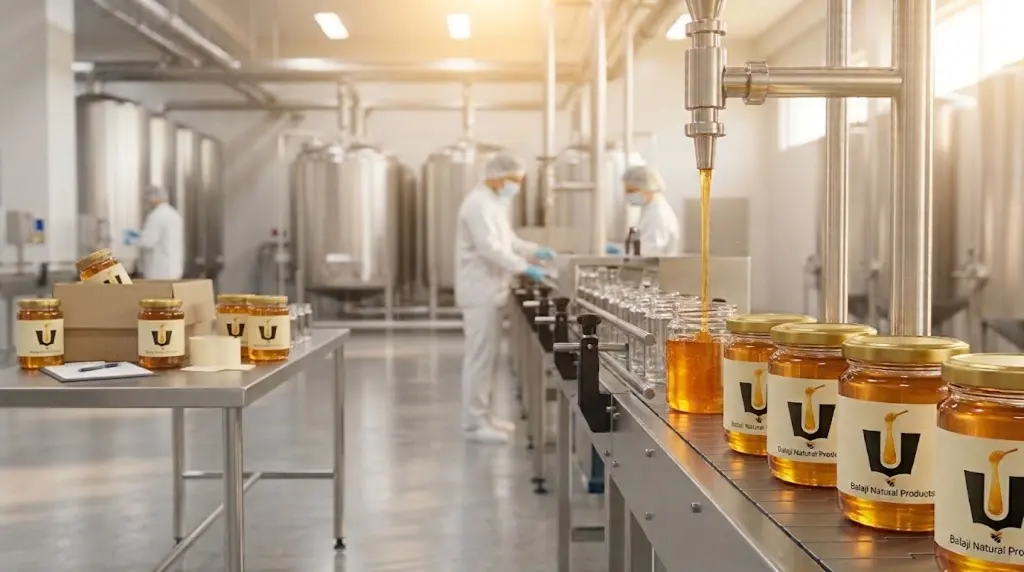
A reliable Honey Manufacturer India will choose and fill containers at the plant under a documented hygiene system, so ask how containers are inspected before filling.
Packaging for Storage
Once honey arrives, storage conditions matter as much as the container.
Keep It Cool and Dry
Store honey in a cool, dry, well-ventilated area away from direct sunlight. Heat speeds up HMF formation and colour change, while humidity increases the moisture risk once containers are opened.
Keep Containers Closed
Reseal part-used containers straight away. An open drum in a humid warehouse can absorb moisture and dust quickly.
Plan for Crystallisation
Many honeys, such as mustard honey, crystallise naturally. This is not a defect, but it affects how you empty the pack. Drums often need controlled, gentle warming to liquefy honey before pumping. Open-top drums or buckets make crystallised honey easier to scoop.
Rotate Stock
Use the oldest lots first and record lot numbers. This keeps quality consistent and makes traceability easier if a question comes up.
Packaging for Honey Storage and Transportation
Transport puts honey through vibration, stacking pressure and temperature swings. The right pack and loading plan reduce damage and losses.
Honey Drums for Export
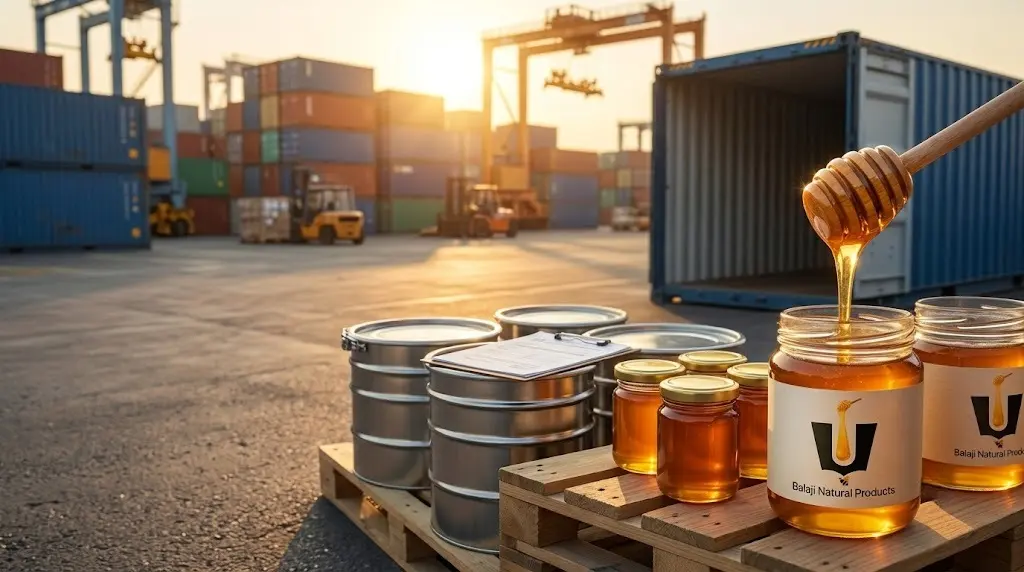
For sea freight, drums are usually palletised and secured inside the container. When you work with a Honey Exporter India, confirm:
Drum and pallet configuration
How drums are strapped or braced to prevent shifting
Lot identification on each drum
Whether the destination prefers drums or cans
Long voyages through hot regions can raise temperatures inside a container. Discuss loading timing and placement with your supplier and freight forwarder.
Labelling of Bulk Containers
Codex requires that bulk (non-retail) honey containers show at least the product name, lot identification, and the name and address of the producer, processor or packer. Other details can travel in the accompanying documents.
Clear lot marks on every drum also help you match test reports to the right container.
Choosing Packaging for Industrial Use
The best industrial pack depends on how honey enters your process.
High-volume automated lines usually suit large drums with pumping or drum-heating equipment.
Batch production in bakeries or confectionery often suits cans or buckets that one person can handle.
Repackers filling retail jars may prefer drums for cost, or cans if they fill in smaller runs.
Food service buyers usually prefer buckets for easy storage and portioning.
Also think about waste. Larger packs reduce packaging cost per kilogram, but only if you use the honey before quality drops once the container is open.
Smaller buyers who do not need bulk volumes can work with a Honey Supplier India that offers buckets or retail-size packs instead.
Questions to Ask Your Supplier
Before you place an order, confirm these points in writing:
1.Which pack formats and sizes are available for your honey variety?
2.What material and internal lining is used?
3.How are containers sealed and labelled?
4.Which tests and documents travel with each lot?
5.What is the minimum order for your chosen pack?
6.How are drums or cans palletised and loaded?
7.Can other sizes be supplied if your line needs them?
The pack written on the quotation should be the pack that ships. Do not assume a default size.
Conclusion
The right honey packaging protects quality, cuts handling time and lowers transport losses. Drums suit high-volume industrial users and export, cans suit mid-sized lots, and buckets suit food service and small producers.
Whatever you choose, insist on food-grade, properly lined and well-sealed containers, store them cool and dry, and make sure every pack carries clear lot identification. A dependable Bulk Honey Supplier India will confirm the pack, documents and loading plan in writing before your honey leaves the plant.
Balaji Natural Products supplies honey in 300 kg epoxy-coated drums, 50 kg and 65 kg cans, and food-grade buckets from 1.5 kg to 30 kg. Share your honey variety, pack format and estimated quantity to request a quotation.
[ Contact : https://www.balajinatural.in/contact ]